Toy Story Retro Round-Up + Toy Story 3: Complete Edition gets a 9. It has Toy story 2: Buzz Lightyear to the Rescue, ergo, it is immediately deserving of this score. Thank you for your attention.
I think I was always sort of aware that the Toy Story games were ahead of their time. While I didn’t grow up with the Genesis or Super Nintendo version, I played the Toy Story game on Game Boy. Which I’ll add was one of the most frustrating experiences I’ve ever had. Clunky controls, blobs of pixels that were supposed to represent Woody and friends and nonsensical gameplay made it a rough time. But it was Toy Story 2: Buzz Lightyear to the Rescue that truly captivated me and my best friend. After school we’d go home to their computer and play this magnificent 3D action platformer, for what felt like years. Now with the Toy Story: Retro Round-up Collection I can finally put this game in context of the broader Toy Story games. While I’ll stand by the fact that Toy Story 2 is the best of the bunch, Digital Eclipse has put together another fine, if a bit safe, collection exploring the Pixar games developed by Traveler’s Tales.
Traveler’s Tales was responsible for all the Toy Story games from the SEGA Genesis, all the way to the PlayStation 1. In between they also made the game for A Bug’s Life, Pixar’s often overlooked second feature. The collection has a lot of options to choose from. When it comes to the games, there are both Game Boy and Game Boy Color versions of all the titles, wherever applicable. As well as picking between the Genesis and Super Nintendo Versions for Toy Story. Finally, at the tail end are the other 3D games, my beloved Toy Story 2, as well as Buzz Lightyear of Star Command and Toy Story Racer. It’s a varied collection that can be attributed to the Traveler’s Tales team from the late 90’s to early 2000’s. The games play authentically and smoothly. In part due to a few quality of life changes that are optional. Such as a render scaler for the 3D titles, as well as a stable framerate and even some lovely cheats and extras that make the older titles a lot more palatable.
I won’t go into each game in detail, but I think that the original Toy Story is a bit of a mixed bag. The visuals are absolutely superb for their time, with animations by pixar and some great sound design. Yet, the gameplay is a frustrating and often confusing experience. Unclear attack patterns, endless scrolling levels and a lot of repetitive tasks made it more enjoyable with several of those aforementioned cheats enabled. A Bug’s Life is a bit off. While it is a 3D collect-a-thon, you explore the world by planting seeds that turn into platforms. Attacking is done by throwing berries. The game doesn’t do a great job of explaining things, but as a template for their later 3D titles, the attempt is admirable. Buzz Lightyear of Star Command is a bit of an odd duck here. Based on the short-lived animated series, it is a racing game on foot in which you collect coins to pay for better weapons and shortcuts. It feels like a strange mixup of the aforementioned A Bug’s Life and Toy Story 2, but outside of its unique gameplay it didn’t really stick with me. Finally, Toy Story Racer also isn’t a traditional racing game, but much more focused on missions. The controls feel very tight, like controlling toy cars. If you have another player to play with, the experience is a lot more enjoyable.
And then there’s Toy Story 2. Truly, one of the greatest 3D action platformers of all time. Roast me on a pyre, I do not care. If you make me choose, I’d rather replay this than Super Mario 64 any day of the week. Its tight levels make exploration a joy. You always feel like a toy exploring this big world. As you collect Pizza Planet Tokens you proceed to new levels that take a few creative liberties but explore the story of Toy Story 2 pretty accurately. There's some backtracking when you unlock new gadgets for Buzz to play around with, so you’ll have to leave some Pizza Planet tokens for later. My biggest gripe is that the choice for the PlayStation 1 version is a tad disappointing. While the soundtrack, one of the greatest of its generation, is still intact, the rendering on the PS1 is very aggressive. Warped walls and uneven lines shift around as you move closer or further away. I recall this being non-existent on the PC version and much smoother on the N64 version. I understand that Digital Eclipse went for consistent performance here, and I suspect that getting the PS1 version running was a lot more straightforward, but I had hoped that the renderer would help alleviate some of these issues. However, comparing it to the PlayStation 5 standalone version of the game, I can say with confidence that the version in Retro Round-up is indeed the best way of playing this version of the game. I’ve had a blast replaying this game and having it now in an easy accessible form on Switch is fantastic.
As with most Digital Eclipse collections, there are a few extras included here. A sound player to listen to the music is very welcome. Some behind the scenes materials have been preserved, such as concept sketches, 3D renders of levels, artworks and promotional materials. Yet I will say that these did feel slightly more held back than their previous historical collections, such as Mortal Kombat Legacy Kollektion and the Atari 50 Anniversary Collection. I suppose it is in part due to the licensee here, but still I had hoped that there would be more to view from the creation of these titles. That having been said, the video interviews are engaging as always. I loved the interview with Jim Hanks, who has been playing the role of Woody more times than his brother and provided some wonderful insight into his work. Great stuff and it makes the collection come together a lot more.
If you’re going in all the way, then Atari has also released Toy Story 3: Complete Edition as part of a bundle with this Round-Up collection. It deserves special mention as this game isn’t just a straight retelling of Toy Story 3. Rather it uses segments from the film as a jumping off point to do its own thing. It is a more linear 3D action game, but it captures the spirit of Toy Story 3 very well. Unlike the other games, here you control multiple characters that each have their own abilities. For example, Buzz can throw other characters far away to reach ledges and large objects. Woody can swing on poles with his pullstring and Jessie can balance on specific platforms to cross gaps. The game is clearly aimed more at kids, and especially accommodating for parents who want to play in co-op with them.
Something I was always told about Toy Story 3 was the addition of the Toy Box. I didn’t think it would appeal to me much, given that sandboxes rarely are something I tend to get a lot of joy out of. But I gotta admit, the Toy Box is a truly fun concept. This Complete Edition adds back in all the content that was locked behind specific versions of the game. In the Toy Box you get a pretty barren lot of desert that you can fill in with toys, buildings and objects you collect in the main game. By gathering resources, helping out with quests and exploring the Toy Box you unlock new items, decorations and inhabitants for your Toy Box. There is a lot of creativity on display here and it is no surprise that this in turn led to the concept returning in the Disney Infinity games. While my primary focus was Toy Story 3 itself, I did go back to the Toy Box in between levels to see if I could add in a few new buildings and explore some more. It is pretty incredible that this concept holds up so well almost 20 years later. I’m sure that new kids and parents will find plenty to enjoy here together as well.
Overall as a complete package, Toy Story: Retro Round-Up + Toy Story 3: Complete Edition is filled to the brim with things to play and do. Both an insightful history lesson in the creation of these titles as well as the ability to play all these games. Did we really need Toy Story on Game Boy and A Bug’s Life in here? Probably not, but as part of the story the game is trying to tell it does have the nice feeling of completion, even if you probably won’t play these games too long. Again, I will always go to bat for Toy Story 2: Buzz Lightyear to the Rescue. That alone to me is worth the price of admission. But I was surprised by how much fun I also had with Toy Story Racer and especially Toy Story 3: Complete Edition. While you can pick up the latter on its own, in the larger context of the Round-up Collection it feels like the perfect bow to tie these games together with. Each one pushed boundaries in its own way, that can still be felt all these years later. Needless to say, this collection comes highly recommended for lovers of the Toy Story films, game history enthusiasts and those looking for a set of games that are fun to play alone as well together. You may not play them for infinity, but this collection certainly goes a step beyond.
Three things you should know first when considering this review. One, while I have dabbled with LEGO games in the past, in truth I don’t think I ever got past the height of playing the original LEGO Star Wars Trilogy back in 2003. Two, I am not a parent, nor do I tend to play my games in co-op multiplayer, which is something that I have tried to not take into consideration here. And three, I am a huge fan of Batman as a character beyond his appearances in movies and games. I think this context is really important, because as excited as I was for LEGO Batman: Legacy of the Dark Knight, I soured on the experience really quickly. Paired with technical issues, an excruciating structure and empty references, this is a legacy that is perhaps better omitted from the book of both LEGO games and Batman as a whole.
To be clear, Legacy of the Dark Knight is pretty ambitious. It tells its own original story by tying together elements from nearly every incarnation of Batman, though primarily the movies and the Arkham Games. Now, this can work given the many, many iterations there have been of this character and his supporting cast. But the end result is a Frankenstein’s monster from a narrative perspective. Take the Joker, for example. The character starts out as Jack Napier’s version of the Joker from Batman 1989 but slowly transforms into this amalgamation of Heath Ledger, The Killing Joke and even the LEGO Batman Movie. It makes the characters feel hollow and lacking a distinct goal on their own. A reference does not make a story.
The same goes for Batman and his allies. All these elements get stitched together but it does not allow the game to give their own take on the character. This version of Batman tries to be both the serious version of Robert Patterson in The Batman but occasionally does out-of-character jokes and references that miss the tone of the game. By having it both ways, I almost got whiplash each time the character went through a mission. And I’m not saying I need a dark and serious version of the character. Batman can be genuinely funny, look at Batman: The Brave and the Bold, or the LEGO Batman Movie, which strike this great balance of him being overconfident and having a bit of an ego but using that to make jokes about the absurdity, too.
Look, you can say that LEGO Batman is primarily aimed at younger audiences, but I think that the writing is very much for the adult playing alongside their child. Because on a structural level this is also where Legacy trips up. Gotham is segmented into several main districts, and the story missions take you through these somewhat chronologically. There are side-activities, such as Riddler challenges and finding specific objects from villains in the overworld. Yet the rewards for these tend to be pretty much focused on studs and WayneTech crates that can be used for both cosmetics and gadget-upgrades. It doesn’t help that this game has one of the worst skill trees I’ve ever seen in a game. With barely any relevant upgrades that are obtainable and making little improvements to either combat or stealth. Each time I found a skill brick, I was reminded how little reason there was to even use it. Not really the reward you’re hoping for when missions are excruciatingly long and repetitive. In one mission early on I was tasked with tracking a shipment of teddy bears that had been modified by The Red Hood. Sounds simple enough, but finding each bear required going through a combat or stealth encounter. When approaching the bear, I had to do yet another mind-numbing minigame to identify the compounds used by the Joker for his toxin. Legacy of the Dark Knight has seen what The Batman Arkham games did, but instead of using that as a springboard to build on, it has simply copied its homework. And not even well at that.
When I spoke to people who went hands-on early with the game, they exclaimed: “It uses the Arkham Combat system”. That alone cemented my interest because in my opinion, the Arkham games are some of the finest action games ever made, in part because the combat is so versatile. Zipping back and forth between opponents and swapping out gadgets to build up combos and takedowns is still such an amazing feeling. But here, LEGO Batman: Legacy of the Dark Knight wears only the mask of the Arkham Games. Its combat is stiff, janky and does not encourage any variety in your playstyle. One button punches, one button dodges, one button does the counter and one button uses a gadget. By getting an absurdly high combo, I’m taking over 30 or more, you can do exactly one instant takedown on an enemy. This would be fine enough if I could use stealth most of the time, you know like Batman would, but even here the system is janky as hell, with unclear indicators when enemies spot you and simply taking down any enemy instantly. It’s at odds with how stealth gameplay is rewarded with more studs, yet the game has so few tools to make stealth engaging. Even here the secondary character gets in the way more often than not, communicating that I really should only play this game with another player. It would explain why combat goes on for what feels like forever.
Jank is the key word here. Whether it is attempting to drive the Batmobile, or trying to glide over Gotham or even simply having a major glitch upon my first boot of the game where I quite literally fell through the floor of the very first level, the game seems to want to do more than it can deliver. Framerate stutters and unintuitive UI make it a slog of an experience. This is a game that uses too many words to tell its story, too many mechanics for its simplistic combat and too many references to feel like something entirely its own.
And that sucks because you can tell how much the team loved to work on this. There are so many costumes for both Batman, his allies and vehicles. There are little jokes and easter eggs that will have Batman-fans smiling. But after that joy wears off, it is back to mindless missions, the overly expansive Gotham and a Batcave that is cumbersome to navigate. I think that LEGO games have always had scope creep. But at least with LEGO Star Wars: The Skywalker Saga you could see how the individual films and chapters made sure that the game was always moving along at a brisk pace. Here, Legacy of Dark Knight’s world and story slam into (LEGO) brick walls over and over again.
So no, I did not like LEGO Batman: Legacy of the Dark Knight. A game that uses the Batman license to upsell you DLC, costumes and references the second you boot up the game. Did you know you get special costumes if you link your HBO Max account to the game? Like a rube I did of course, and sure my Black Lantern batman looks very cool. For five seconds. Each night I went back in and hoped that this time the game would click for me. But it never did. In fact its aspirations kept running into the flimsy ground it was built upon. If anything I kept lamenting what we lost in Rocksteady and Batman games from the last decade. Save your 60 dollars and buy yourself a cool LEGO set. I can guarantee you’ll get more fun from that.
Why yes, another Metroidvania is gracing the Nintendo Switch 2. It’s been a pretty astonishing avalanche of high-quality titles in this genre over the last few years. Ever since Hollow Knight and the return of 2D Metroid, it’s been such a pleasure to see other developers reinterpret, add and challenge the conventions of the genre. Enter Well Dweller from Kyle Thompson Games, which is another fantastic game you should absolutely not overlook in 2026.
Well Dweller sees you playing as Glimmer, a bird that lives with their family in a small well. They may very well be the last bird family in the kingdom as the cruel queen has ordered all her hunters to capture the birds for their feathers to create a dress. But the family needs food, and the scraps from the hunters will have to do. Alas, misfortune arrives and Glimmer’s family is taken away. Armed with nothing but a large matchstick, Glimmer sets out to rescue their siblings and mother from the clutches of the queen.
At first I was sort of taken aback by Well Dweller, but not because of its world design; the presentation is immediately striking. It’s gorgeous, fairy-tale-like, and immediately distinguishes itself from similar titles. This is particularly true because the stories that are told are very dark and dour. The ravaged landscape and scattered groups of critters trying to survive are balanced by beautiful colors and distinctive regions. But what really struck me was the pacing. It felt slow and unwieldy. For a bird, glimmer feels sluggish and can’t fly or jump particularly far. It made the opening a bit rough to get through.
Sticking with it as I did, Well Dweller slowly unravels its clever iterations on the Metroidvania. That matchstick isn’t just a melee weapon. It can be shot at walls to create a little platform to increase your jump. But it can only be done when you’re stationary on solid ground. It makes traversal and platforming a lot more engaging, especially given that using your weapon to fight retrieves the matchstick from said wall. You can see how all these layers stack together to create some truly fun platforming challenges. That’s where the real strength of Well Dweller is hidden. The level design is simply superb. At first it may feel as if the map is incomprehensibly large and cumbersome to navigate, but the game flows so naturally that exploration, whether it is for straightforward progression or finding hidden collectibles, always comes naturally. You’re never needlessly prodding at walls to find obtuse ways to proceed. It made coming back to Well Dweller each night such fun.
Underneath the hood there are some careful considerations that aid its world design. First off are the trinkets. These little collectibles give minor perks to Glimmer. They start out small, like adding a burning effect to your throwable weapon or gaining more currency from defeated enemies. But the game only limits the number of trinkets you can equip by how many slots you have found in the world or bought from the shop. These slots are fairly cheap, meaning that you can slowly amass a true armory of trinkets with all their effects stacked. The game also allows you to fast travel to any save point at any time. Whenever you’re low on health or want to check out your new trinkets, you can do so right away and tend to lose only minimal progress. That may sound a bit like a letdown to hardcore fans, but I think it is exactly the thing I was missing from something like Silksong. It just makes exploration so much more fun. Add to that the third clever addition: the ability to purchase the location of secrets in the world at your save point. Even while these points are marked, you still need to often overcome a platforming or navigational challenge in reaching the secret. Best of all? These are all optional. If you want to play it as a true hardcore 2D action platformer, you definitely can.
There is also a stout challenge found in the boss battles. These frightening creatures, often husks of humans or bizarre transformations of critters, are an absolute highlight. Their attack patterns are clearly telegraphed and unlike many other games in this genre, touching a boss does not inflict damage. This means that the combat truly encourages you to get close and personal if you can manage to dodge their incoming attacks. Some aren’t even traditional bosses, but rather a series of escalating platforming challenges. The variety is amazing and they tend to feed back into the darker storytelling the game is going for.
Well Dweller doesn’t overplay its hand. It may seem incomprehensible at first glance, but through its thoughtful design, gorgeous artstyle and engaging combat it feels like another one of those must-play indie Metroidvanias. I have yet to play Crypt Custodian or Islets, but Kyle Thompson is now absolutely on my radar as a game designer. To me, this game is a surprise hidden gem. Everything fits together so well (pun intended). In a stacked year full of strong titles, this is another contender for my favorites of 2026.
‘If it ain't broke don't fix it’ can often be invoked when talking about sequels. But even in this case, I was surprised by how close TOEM 2 sticks to the ideas and vision of the original release. The team at Something We Made clearly felt like there was more to find in the world they created back in 2021. Even if the improvements are minor, TOEM 2 does exactly what it sets out to do.
Returning as the photographer in TOEM 2 you once again set out across the country to photograph and capture the blooming of an ancient tree during a big festival. However, to reach the festival you'll need to help the inhabitants of the regions with their problems and make new friends.
Much of what made TOEM so enjoyable has been retained here. Its black-and-white art style, a handcrafted mix of Paper Mario and a compact 3D platformer make for some pleasant vistas. At any time you can grab your camera and observe the world while taking photos. Your shots are often the solutions to questions and problems characters are dealing with. From finding missing animals, to spotting things hiding in the environment. Completing the request nets you a stamp and once you have enough stamps you get to move to the next destination, slightly closer to your end goal.
The new addition here is camera-abilities. Each locale introduces something that your camera can use to interact with the environment within that particular region. For example a pair of scissors that can cut down vines, but also apples from trees. It breaks up the pace of the game a bit, which still boils down to a lot of walking back and forth.
In that sense, TOEM 2 plays it safe. The soundtrack is still delightfully lo-fi, with plenty of new tracks. The vibes are chill and cozy. You don’t have to stress about timers. And the camera-mechanics are really a lot more playful than aimed to please wannabe photographers. TOEM 2 embraces its identity as a short adventure game much more. While I didn’t have to, I did complete all requests in the game and tried to capture as many critters as I could. In three hours I saw the end of the adventure which was pleasant enough.
Sequels tend to get lost in the weeds of expanding scope, but Something We Made set out to simply improve and build upon what made the original TOEM pretty engaging. TOEM 2 is not groundbreaking. You may only notice the improvements when putting it side-by-side with the original. That is not a bad thing for fans and for those looking for a short and cozy experience you get exactly what you expect.
Editor's Note:This review is focused on the Nintendo Switch version of Sniper Dan. However, unannounced, a Nintendo Switch 2 version was also released on launch day, featuring improved controls, including the option for mouse controls on Nintendo Switch 2. This version is a free upgrade for owners of the Switch versino of Sniper Dan. This review has been updated to reflect this, though its score has not been changed after publication.
The indie titles that tend to pique my interest are those that take well known ideas and merge them into something truly unique. Sniper Dan is the natural evolution of Where is Waldo? In videogame form. A hide and seek game where your goal is to help people across a large map with all sorts of small tasks. And by help I mean spotting and shooting objects with your sniper rifle. While the visual comedy and gameplay are entertaining, it's this rifle’s scope that makes Sniper Dan wear thin rather quickly.
As a self-employed entrepreneur, Dan is called in to assist people all across town with his trusty sniper rifle. Each stage you are presented with a list of tasks to complete and perhaps a cryptic hint. Your only interaction with the world is through the scope of your rifle as you shoot and make the problems go away. Hitting people or animals isn’t just evil, it is also bad for your overall score. Solving the clue and helping out awards both money and reputation, which can be spend at the market to improve your rifle and offices.
The charm of Sniper Dan is in the vignettes of its levels. Busting harbours, busy parks and stretched out farmlands, the levels are pretty diverse. Each filled with all sorts of little absurdist jokes. Whether it is a walrus commandeering a pirate ship, cranes going haywire, fountains leaking or engines being clogged. You can only do one thing. Shoot at it with your rifle. It becomes this game of spotting what your request wants you to handle. Take the clogged engine. In the harbor you may first be searching the cars, but the actual solution is a lone boat that has seaweed all over its engine. The game plays with your expectations and more often than not peering over these locales is quite a challenge. Especially when alternative missions open up upon completion.
But again, interaction is limited and gets fairly stale. Your actions in the park, do not suddenly tell a little storyline with returning characters down the line. While you are rewarded with money to buy better scopes or outfits, frankly they don’t change much in terms of the gameplay. It is nice to collect small decorative pieces for your office, but there isn’t really a point to them. While I stand by that the levels are pretty diverse, I do think that the visual style makes it blend a bit together. For comedic purposes the big eyes and bright colors sell the tone of the game very well. But as much as I smirked or chuckled, I never really had a laugh-out-loud moment.
And ultimately that is the weird gap that Sniper Dan falls in-between. The charm of a hide-and-seek-book like “Where’s Waldo”? is in spotting the little connections. It is in having this physical object and art that has weight to it. Here Sniper Dan’s levels can be cluttered for nothing other than distraction and absurdism. There are a few missions to break up the pace. Urgent requests that net a bigger reward. Yet the game never feels comfortable in putting pressure on the player. You have all the ammo and time in the world. Making the choice of a sniper feel at odds with the game’s overall design.
On Switch 2, the experience with this Switch title was pretty solid. On launch day there was Switch 2 version made available, a free upgrade to owners of the Switch version of the game, which does include mouse controls. However for aiming your weapon, there are no gyro controls available in either verison. I wouldn’t put it past the team to come back and add those in later, but at least with the Switch version you can press your face up really close to the screen in handheld mode to spot your objectives.
I do love a good hide-and-seek like experience. Hidden Folks sold me on its charm with the cute visuals and audio design. And I had hoped to get something similar out of Sniper Dan. Where perception is rewarded. But in the end, I got bored fairly quickly. Viewing the world through a scope becomes a tunnel and made me less appreciative of the level designs. Its absurd humor did give it a distinct flavor, but with the meaningless rewards and progression this wasn’t a game I really wanted to stare at for too long. Because in the end that made me a bit too aware of how hollow it feels. Sniper Dan is a competent game, but once you’ve shot your shot, that is about all I can say.
Disclaimer: This game is developed by MBC Group which is a wholly owned subsidiary of the Public Investment Fund (PIF) of the Kingdom of Saudi Arabia. Amnesty International and Human Rights Watch have written extensive reports about how human rights are being violated and abused by the PIF under the leadership of Crown Prince Mohammed bin Salman. Including the murder of Saudi journalist Jamal Khashoggi.
I’m pretty sure I’m not the only one who was surprised by the reveal of 1001 Threads of Mizan during Opening Night Live at Gamescom. It offers a distinct setting, inspired by the Middle East and the tales of Scheherazade as well as something that seems to graphically punch above its weight. So on my final day of Gamescom I managed to go hands-on with the game for about thirty minutes. My demo was co-op focused, seeing me and two others defeating two massive bosses. Accompanied by the game’s creative director Lars Bonde, who worked on Prince of Persia and Watch_Dogs for Ubisoft, I was surprised by how the game balances two very different types of gameplay. The three characters you can pick from each have distinctive weapons and styles. I favored the ranged fighter Yusra, using her bow and a staff, but each character has a mixture of several archetypes. Combat feels pretty straightforward, with light and heavy attacks, a special charged attack, and a parry. Enemies didn’t have a lot of complex patterns and we smashed our way through groups fairly easily. That is until we reached the first boss, who threw tornados and lightning fast attacks our way.
This is where your secondary mechanics become essential. Each character has a flying carpet that you can spawn in at any time. The best analogy here is that it almost turns into a game of Star Fox once you step on the carpet. You can zoom around and gain altitude at pretty high speeds, but attacking is limited to single attacks when you’re in melee range of your target. Using the left trigger you can brake to make quick turns and dodge incoming objects that bosses throw at you. This was required when dealing with the massive Djinn waiting for us underneath the desert–an enormous boss that would shoot layers and layers of projectiles our way, with only tiny gaps to pass through. Figuring out her patterns and waiting for the right moment to strike her weak spots was quite an endurance run, especially when relying on your other teammates for a combined attack when the time was right. Even though I am not one for multiplayer games, I liked the dynamics at play here. That said, it is hard to gauge without seeing a progression system that helps define the other fighters.
The story is also placed on a high pedestal for 1001 Threads. The creative director told us to of course expect some appearances from famous characters of the One Thousand and One Nights stories. The game respects the culture those tales originated from. One of the first things he did was hire cultural experts from the Middle East and PhD researchers who are specialized in the stories of One Thousand and One Nights. It simply does not feel like a case where a western-led studio is barging in and mixing and matching elements from a variety of cultures, which I really appreciate. Granted the gameplay is still pretty much in line with a lot of AA and AAA game projects: familiar combat systems with a couple new flourishes rolled into one. I was, however, especially pleased to hear that the game also fully supports a single player mode where you get to learn more about the three characters. So no need to rely on your friends to see it through till the end.
I do wonder how well the game will run on Switch 2. I’ve been impressed by the recent ports from studios like Ubisoft, Saber, and Capcom and it gives me hope that Switch 2 was immediately mentioned after the reveal. Yet I remain cautious for how well a game of this scale can perform on the handheld, particularly because it does seem like we may be waiting on this one for quite some time.
But overall I think that during this especially meager Gamescom, 1001 Threads of Mizan was the big surprise for me at the show. With a talented creative team and a ton of money thrown at the screen, it does seem to be a very impressive action game for both solo players and those who like to head out with friends. That magic carpet truly sets it apart and I am excited to see how it will be deployed for some of the larger scale bosses that the trailer seemed to be hinting at. At the very least, you have plenty of time to brush up on these scores of tales as the game is still quite some time away.
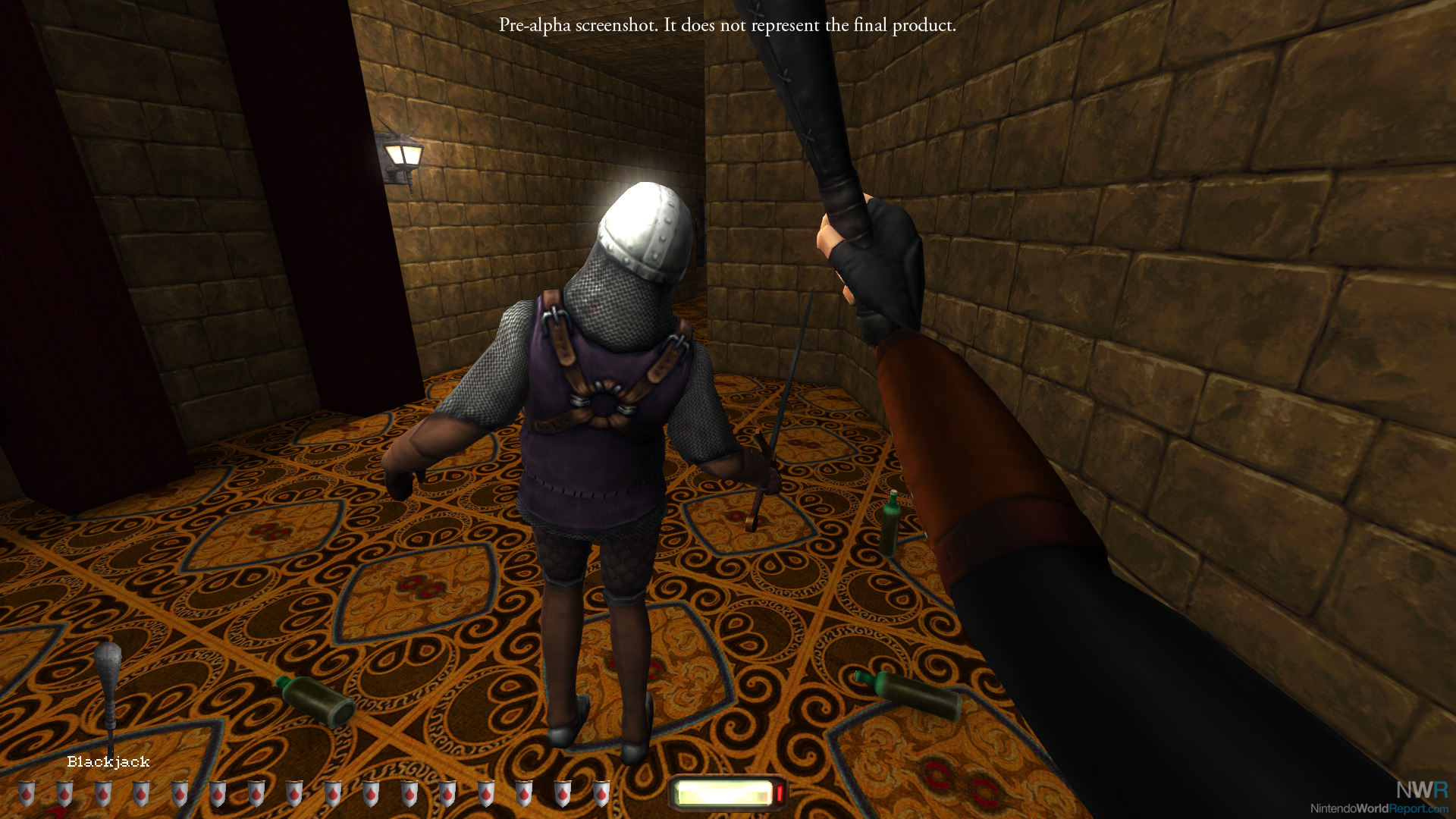
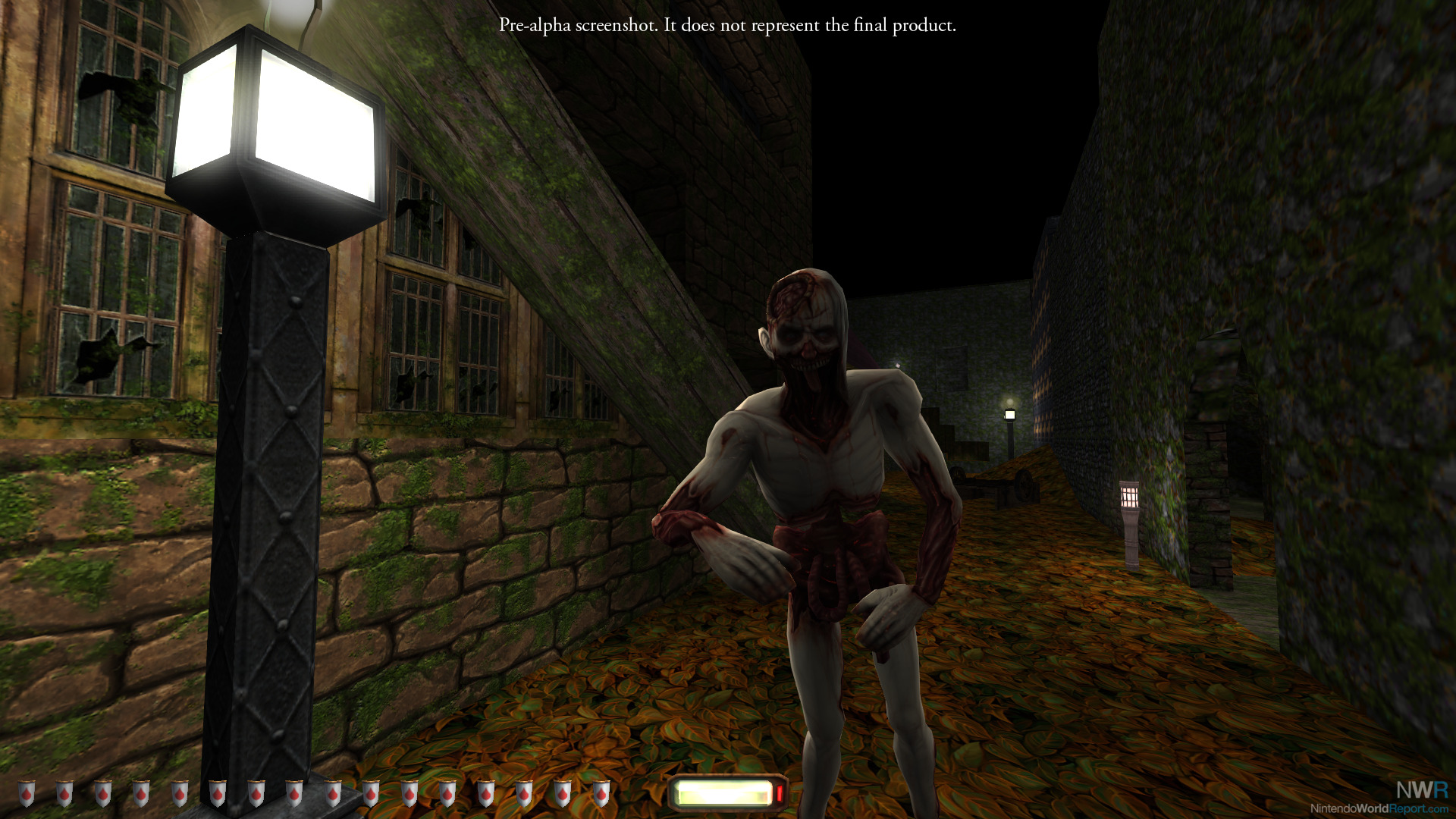
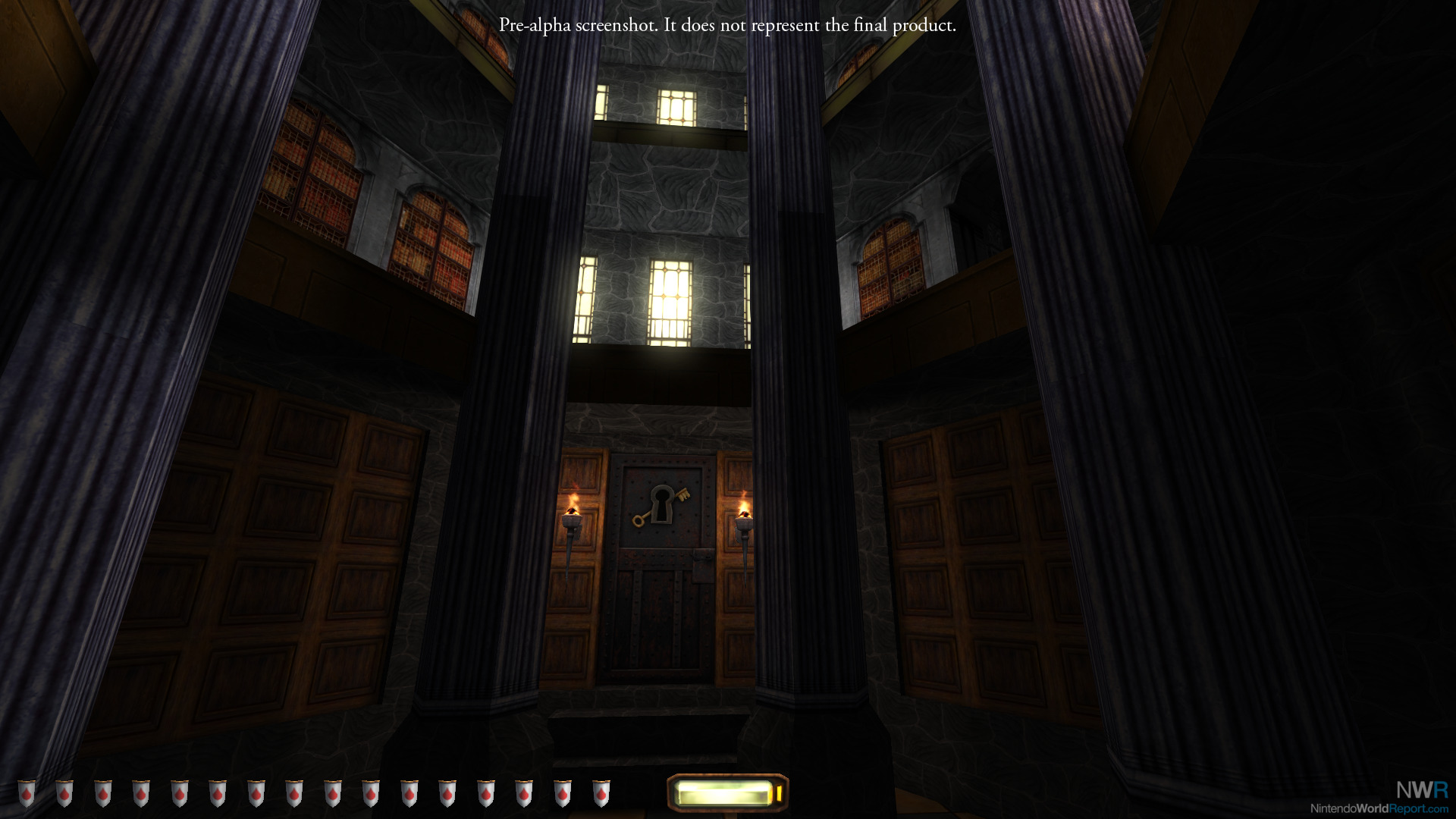
Among the pantheon of ‘must-play-classics’ I have yet to fully experience Thief: The Dark Project. Looking Glass Studios magnum opus, according to many, was groundbreaking in both the stealth and immersive sim genre. So who else to entrust with a full remaster than Nightdive Studios? Having played around with it for about half an hour I can say that I’m so excited to finally experience this game later this year on Switch 2. Because from what I’ve played I can tell that this game still holds up wonderfully nearly 30 years later.
As master thief Garrett you are tasked with infiltrating and stealing valuable objects from noblemen for your own personal gain. While there is a lot of story going on, my time with the demo really focused on the gameplay. A first-person stealth game is still pretty unique to this day and Thief really builds on the idea of being an immersive experience. As you sneak through towns and buildings, stealing keys and taking out guards silently, you will need to account for the environment to not get spotted. Noisy floors, lights and line of sight need to be carefully avoided if you want to be a true thief. It feels like the world of Thief lives and breathes. Guards make their rounds in distinct patterns but are easily distracted or may hunt you down if they notice something out of place. While you have a pretty big toolset of arrows and tricks at your disposal it is always better to avoid a fight if you can.
The Thief Remaster has been approached with great care by Nightdive. The basis for the title has been the Gold Edition of the game with all content being here. Elements that didn’t need any touching up have been left alone, like the stealth mechanics and the original scripts. Rather the focus has been on accessibility through a new controller-focused layout that works wonders. Using radial menus for quick interactions, triggers for combat and dedicated buttons for leaning and sneaking around, the game is in line with modern stealth games. Given how much the games industry has evolved over the decades I was astonished how quickly I managed to grasp the systems at play here. Especially as a newcomer.
Visually the textures and lighting have been reworked to feel like you remember them. Don’t expect environments to be fully reworked materials, but textures have an appropriate look. At any time you can swap between the classic and the modern visuals if you want, but I liked the look that Nightdive has gone with quite a bit. It helps to set expectations as well and lets the gameplay speak for itself. The care and attention to detail is really what sets Nightdive’s remasters apart and Thief truly is shaping up to be another notch in their belt. Small quality of life improvements like saving at any time and having fast restarts are welcome given the trickiness of getting past some of the guards. Given its PC legacy I suspect that the Switch 2 will probably include some welcome features like mouse controls, but that remains to be seen.
As someone who’s been eyeing Thief: The Dark Project for the longest time on their steam wishlist, I am so happy that I can now look forward to actually playing it in 2026. The controls feel great, the original intent of the design seems to have been kept in place and the gameplay still feels in line with modern stealth titles. I’m of course very curious to see how the game will run on Switch and Switch 2 but I have confidence in Nightdive. As a fledgling thief I can’t wait to break-in my copy this winter.
I think I quite literally jumped up in excitement when I saw that Atari was finally bringing out a brand-new RollerCoaster Tycoon game. It is hard to overstate how big RCT was for PC gamers in Europe and around me growing up. RCT and RCT2 are bonafide classics and the later entries have proven that it is incredibly difficult to follow in their footsteps. So with RollerCoaster Tycoon: Wonderworks I was very pleased to hear and see the care and attention Springloaded is putting into this task. Their previous work on Let’s Build A Zoo has certainly prepared them for sim-like design, but are they up to the task to improve on greatness? After an hour of hands-on with Wonderworks I’m ready to believe that a new era of RCT is truly upon us.
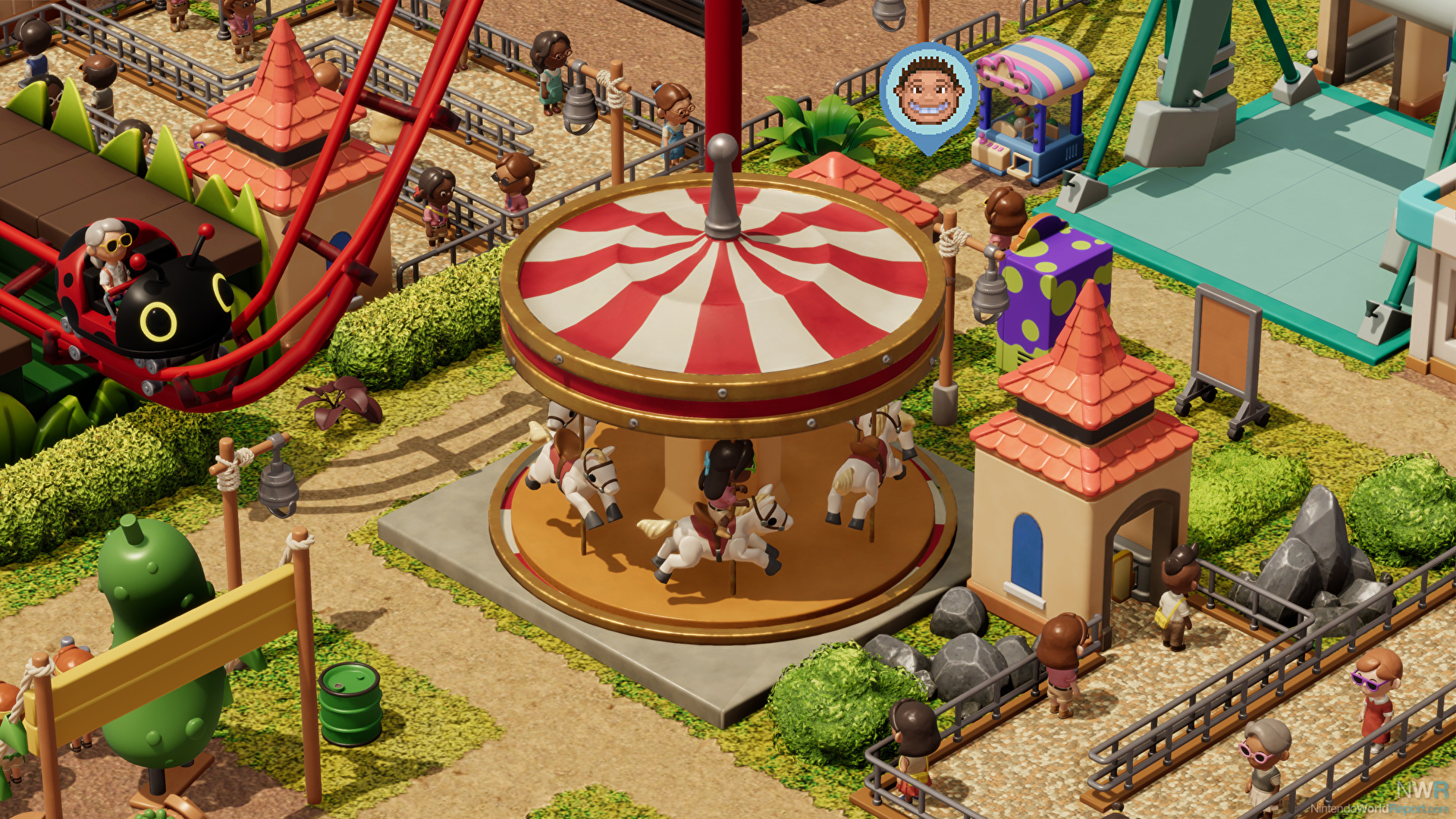
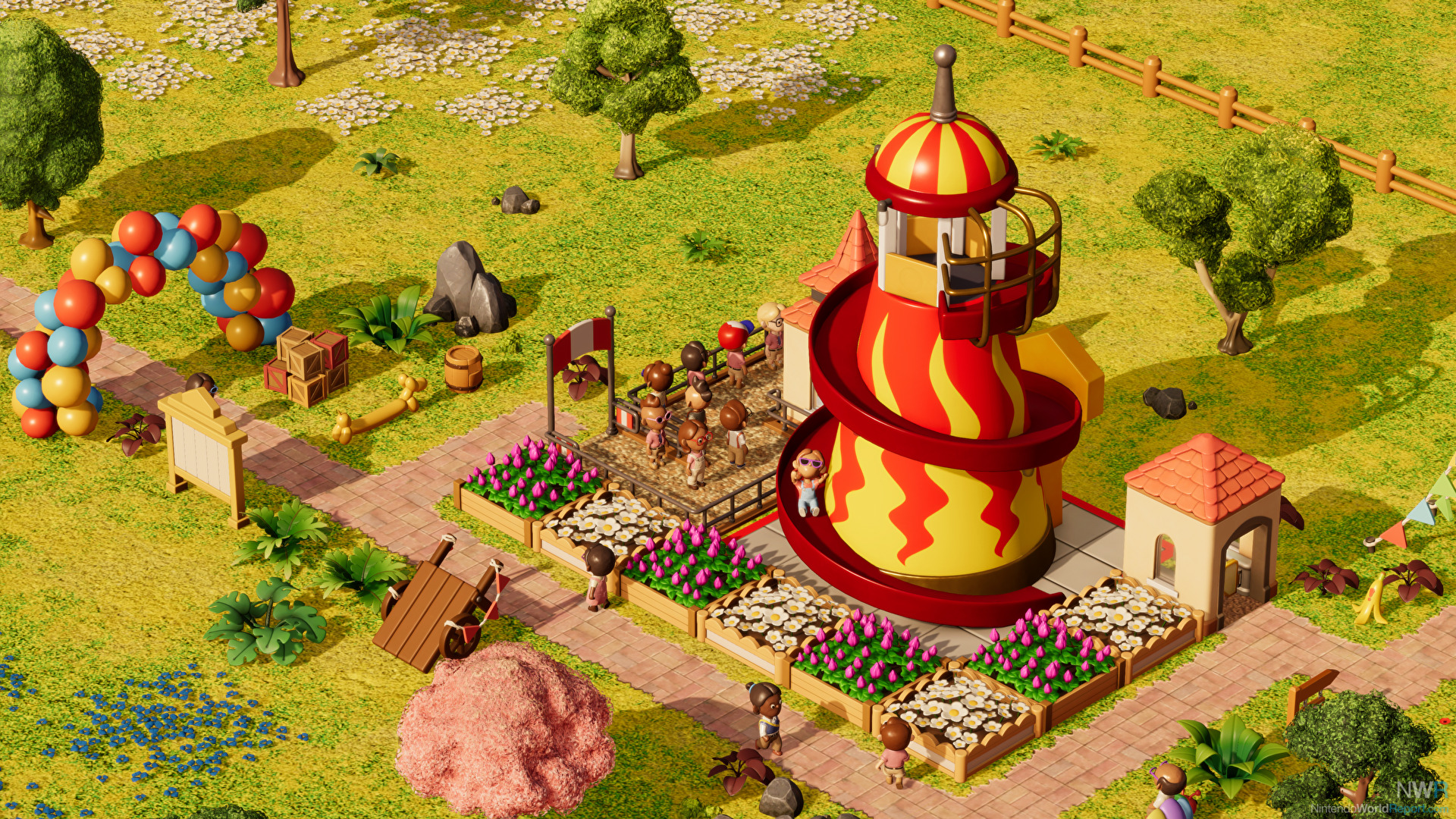
So let’s begin with the big overall approach that the designers are taking with Wonderworks. This time around you are truly working on building an empire of theme parks around the world. You start out with a limited and small park with truly dingy rides and attractions. Barrels slapped on a wheel, a barn repurposed as a slide or simple wooden shacks functioning as entrances and exits. It doesn’t just emphasize that you are starting from scratch, but also gives each park a distinctive layout and challenge. But of course as your park grows you can build new coasters and attractions to attract customers.
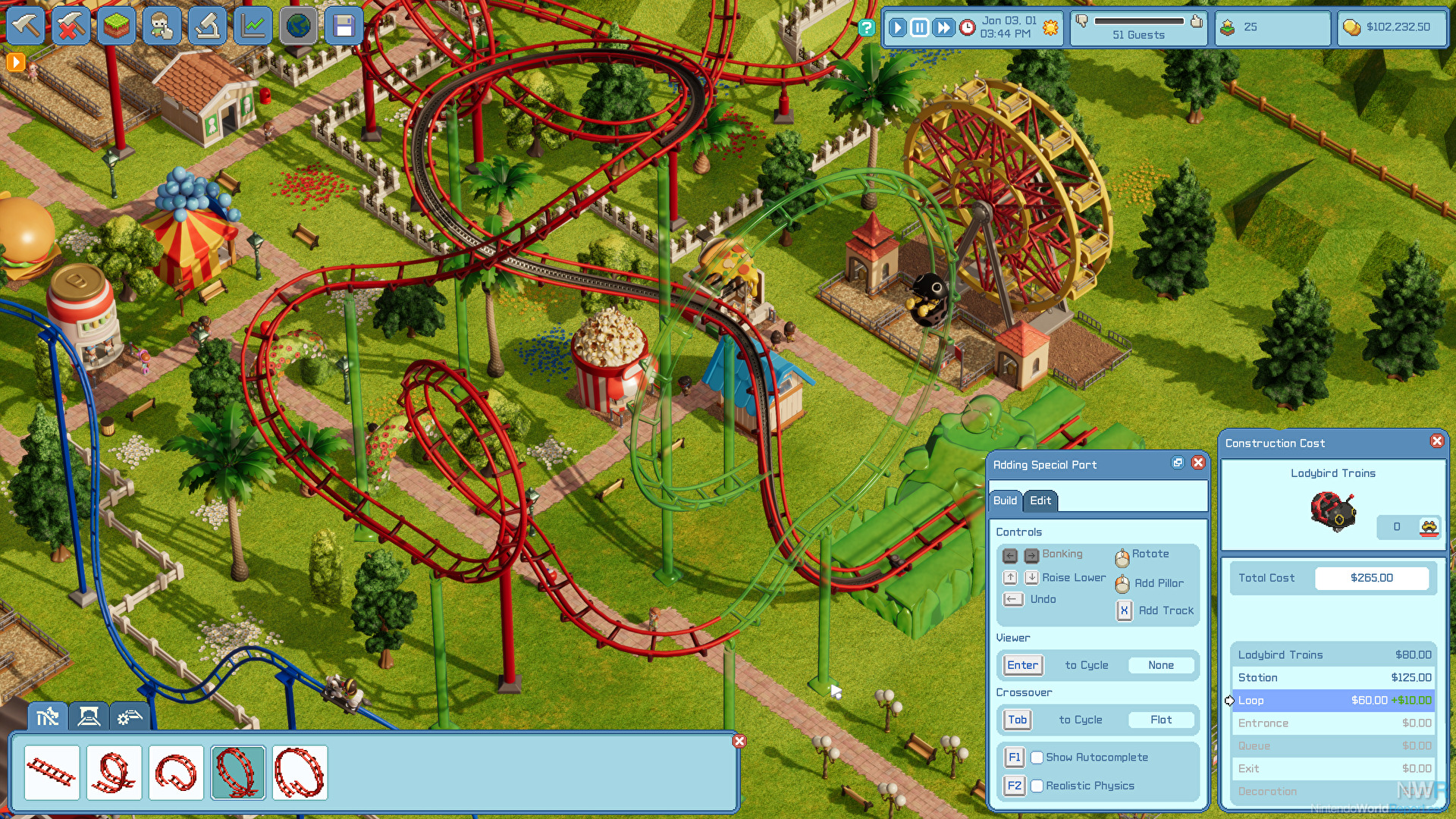
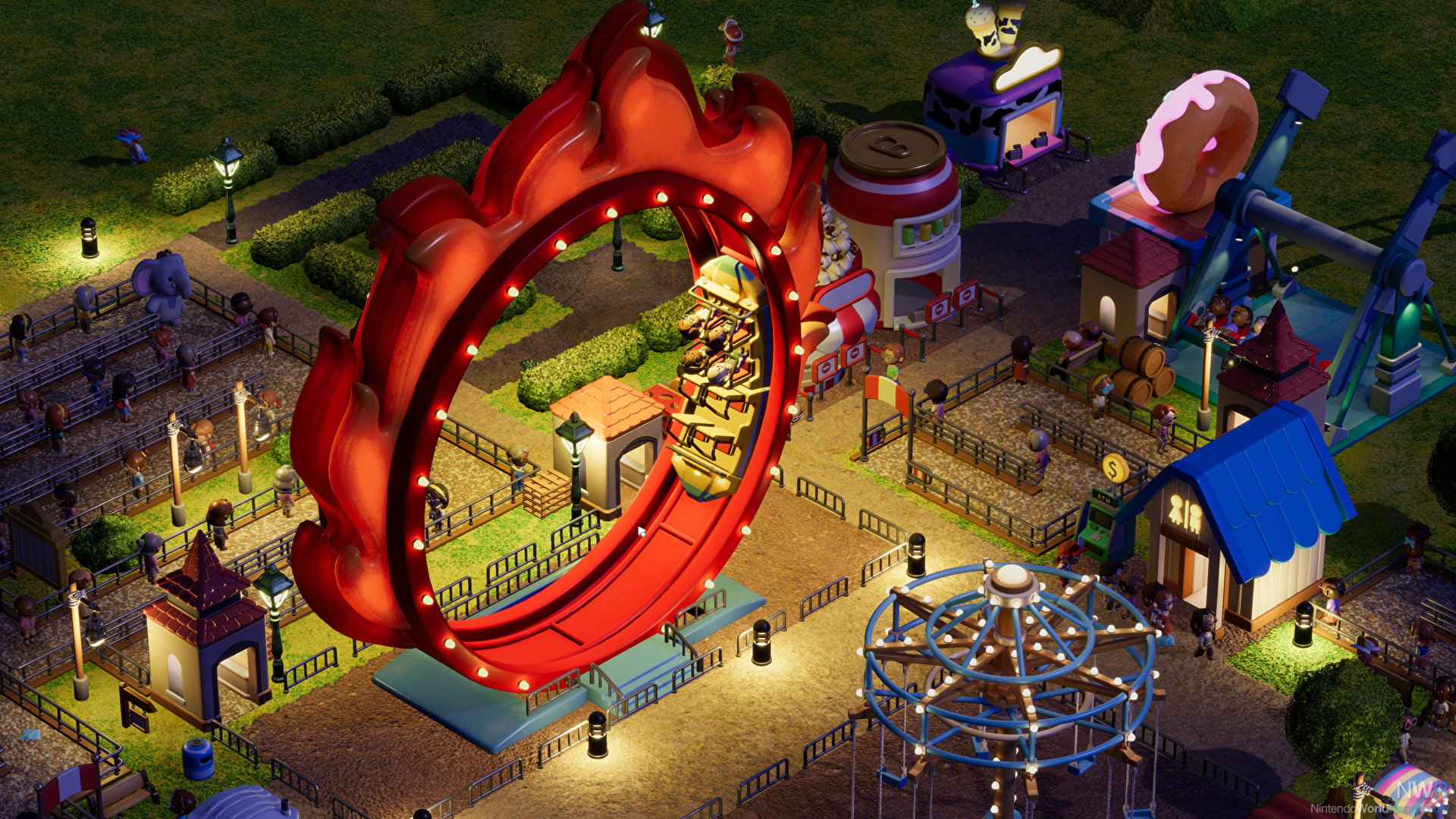
The keyword in Wonderworks is truly ‘customization’. There was always a certain amount of control you had over individual rides and stands, but here almost everything can be tweaked. Want your coaster to have different speeds for ramps and loops? You can adjust each booster or break individually. Want your chair swing to accelerate at an intense speed? You can change it on the fly. When constructing your coaster you can enable realistic physics and get a little dummy-cart going while you are laying down the track to see if they will remain in their seats. The builder itself feels more intuitive than the original RCT if you ask me. In part because those original games were limited by their programming and we as players got so used to that particular UI that we never questioned it. But here the coaster builder automatically follows your cursor. Meaning that building corners or curves is automatically done by ‘drawing’ your track. It is something that will take some getting used to, but after ten minutes I was already using elevation, speed sections and breaks to create a pretty cool looping track. Coasters and rides can be upgraded individually, but if for some reason they end up fully destroyed, you will lose all progress for that ride. It’s a nice way to keep evolving your park long after you’ve completed the missions.
On the management side a few things work differently now too. New rides can be researched and developed with a dedicated laboratory that has to be placed inside the park. While you still get regular new rides, occasionally you may need to choose between two different ones, meaning that no park will ever really be the same. There’s also new employee categories. Concession stands are operated by park employees who will need regular breaks and energy drinks to improve their morale and serving speed. So much for locking park guests in with a soda fountain to lose, I mean spend, all their hard earned cash on. And of course, the antlike nature of park guests is still something you have full control over. Not just reading their thoughts, but of course dragging them over to their ‘last ride’. However, this time around you may actually end up getting sued by relatives over the deaths of park guests. I had a big laugh when I saw that I could hire an expert legal team that would lower the settlement fee out of court. Something we truly couldn’t imagine in the real world. Right?
The real challenge that Springloaded and Atari are faced with is a generation of players that have loved and devoured everything RCT. It’s no wonder that after the reveal trailer they received a lot of feedback from dedicated players. Therefore the game will launch first in Early Access sometime in 2027 to make sure that they can optimize and adjust the features available. While I’m not usually a big fan of Early Access, in this case it feels warranted. For example, I tried to place park benches across pathways but it removed the path instead. Placing a bench next to a path is so unintuitive to a veteran RCT player that I’m now fully on board with getting in more feedback for the team down the road. When asked about licensed rides from parks like Six Flags as the original had, the developers remain committed to their own rides and the creativity of players, but didn’t necessarily rule anything out after the game hits 1.0 down the road.
But the foundations for RCT Wonderworks do feel pretty solid. The visual style has finally found the right balance between the classic pixel art and the more dynamic 3D art for its rides and scenery. In particular it should help with terraforming and building truly absurd coasters. The worldwide angle the game takes allows for some really fun locations as well as an interconnected world. Your ambitions as a theme park tycoon are not merely limited to the boundaries of the park itself, which in turn encourages more creativity. While I’m cautious I am also very optimistic about the future of Rollercoaster Tycoon. As a series with so much potential for modern installments Wonderworks seems to put its right foot forward. With the proper guidance from players and developers willing to listen I can see this truly being the next generation of theme park management sims. Get me a fastpass for 2027 please!
As much as I adore the big lizard, I’ll have to admit that I’ve never really played a Godzilla game. Which to me, as a massive classic Godzilla fan feels like I’ve been missing out. But after going toe-to-toe with Leon in Godzilla: Destroy All Monsters Melee - Remastered I’m pretty sure I’ve taken a crash course of the peak in 2005. This melee brawler feels like a great entry point for 3D arena fighters while a ton of movesets and treats for fans of the King of all monsters.
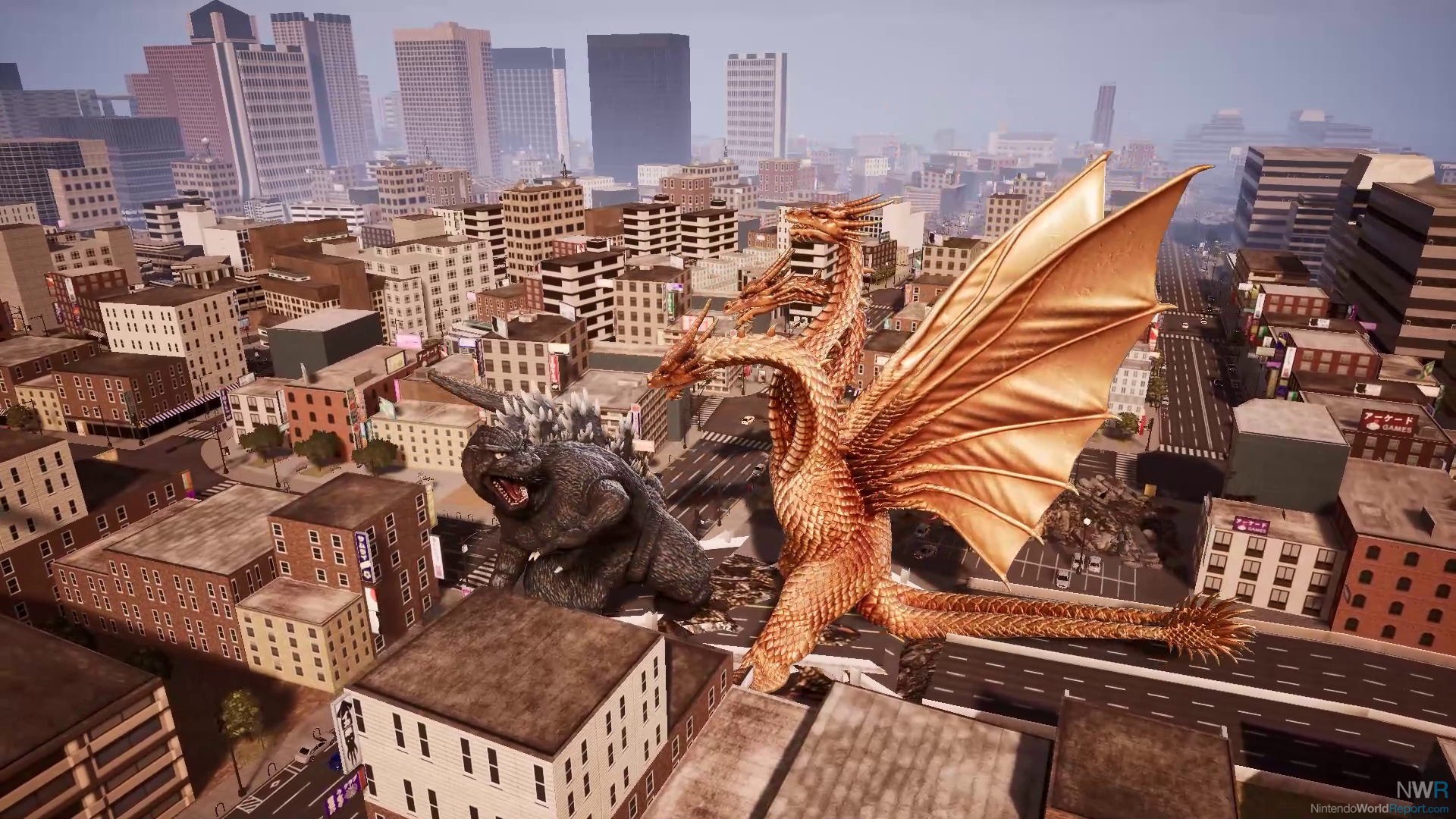
During our demo we were dropped straight into the action. In a one-on-one fight you can choose from a wide selection of Godzilla icons. Of course the King himself in several iterations is here, but King Ghidora, Anguirus and Gigan were all playable. Each monster comes with its own unique moveset and abilities that we quickly got the hang of. Grabbing not just the opponent, but buildings and environmental pieces can be picked up and thrown across the map as well. Charging your atomic breath or ranged attack takes time, but can really knock monsters around as well. What really struck me is that the game is a lot slower and more tactical than most fighting games I’ve played. That’s not a detriment, it makes the monsters feel weighty and true to their depiction in the film. I half expected the monsters to take off a mask and show the human performer inside the suit.
Thankfully the game leans into the weirdness of the Godzilla series. Power-ups can be picked up to unleash a supporting attack, such as Mothra when playing as Godzilla. I never felt like the fights never became too one-sided. Until the very last bit of the health bar was removed I still thought I had a chance against Leon, though ultimately his timely dodges did beat my strategy of getting up in his face. Pipeworks Software has apparently stayed as true as possible to the original design, but quite literally wrapping the code of the original into Unreal Engine 5. Making the game visually look better, but retaining that feel of the GameCube title.
In terms of modes we only got to play around with the one-on-one versus mode. Though I was told that all the original modes will make a return in this version and the game will support online gameplay as well. At the end of every match points are received that can be used to unlock new characters, stages and gallery art pieces. While there are slight tweaks and additions to the overall experience, such as a new local co-op mode and weather effects to choose from on the stages, you can pretty much expect a true to form remaster here.
And I think that emphasizes the back-to-basics approach that Pipeworks is taking here. It was so much fun to grunt and shout at each other while trying to make punches and kicks connect. We got really excited breaking through a wall of boulders and we began tossing each other into a fiery lake of magma. Game like these were great on the GameCube because of the excitement playing against your friends on the couch. Godzilla: Destroy All Monsters Melee Remastered is totally a throwback of this era of games. Without battle passes, live-services and paying for additional characters it is refreshing almost 25 years later.
I am not ashamed to admit it. If you wake me up in the middle of the night and ask me if I’d rather play Super Mario 64 or Toy Story 2: Buzz Lightyear to the Rescue I will go with the Space Ranger. Not only is it one of the most formative games of my childhood, but over time I’ve come to realize that it was perhaps ahead of its time in certain design ideas. From the absolutely top-notch soundtrack to the many creative levels and power-ups to incentivize completion. The Toy Story: Retro Round-up collection apparently also includes other games which is fine too I guess.
Joking aside, Digital Eclipse is once again bringing the goods. Not only are you getting several versions of Toy Story games such as the original SNES and Game Boy version of Toy Story, Toy Story Racers, Buzz Lightyear of Star Command and even a Bug’s Life, but in their historical approach there are also a ton of bonus features included. I’m looking forward to all the interviews with the original teams at Traveler’s Tales and Disney/Pixar to see how these games were brought to life. Design documents, development photos and concept art in the highest resolution I could ask for. During Gamescom we were shown some of the new features like “Rex’s Cheat Codes” that can be enabled at any time to change the game’s behavior. Whether that is infinite lives in the pretty difficult Toy Story for Game Boy or getting power-ups earlier in Buzz Lightyear to the Rescue. It should make for an accessible collection even if you haven’t played all these titles. A music player is here too to fully appreciate the soundtrack of TS2:BLTTR (and others I suppose).
What surprised me was even in the inclusion of an upscaler that enhances the look and performance of all games. You can toggle this as much as you want, but I loved how it retained the look and feel of these games while suddenly running a lot smoother. While only the PlayStation 1 versions are included for the 3D-games, it did make me excited to finally give A Bug’s Life a shot that is included here too. Finally a rewind feature is available for all games in this collection, meaning that falling down the tree in Andy’s backyard in Toy Story 2 is no longer the bane of my existence. Look, can you tell I am excited for one particular game here.We unfortunately did not get to play around with Toy Story 3: Complete edition quite yet, but I was assured that all the ‘lost’ content of the game will be included here. I do have to say that playing as the evil emperor Zurg does sound quite enticing in the Toy Box mode.
If you have any nostalgia for these titles, or are simply looking for a fun collection of platformers from the late 90’s and 2000’s the Toy Story: Retro Round-up should be really everything you could ask for. As I left the appointment with my buddy Leon we looked at each other. We’ve seen all the movies together. Played through Toy Story 2 on a computer at his house after school. Now jaded, almost-30-year-olds I couldn’t help but realize that we both had a sparkle of joy in our eyes. October 15th cannot come soon enough.
As the oldest name in gaming that is still around, Atari has reinvented itself over the last decade or so. Not just investing in a ton of legacy IP, but giving smaller studios the chance to work with classic brands while leaving room for a lot of original interpretations. This year Atari brought out some real surprises that I was very excited to try for the very first time. Across the board the commitment from Atari to physical releases on all platforms is something that has to be celebrated outright. Whether you’re old or new, with the lineup that Atari has cooking I think you’re going to be hard pressed to not find something you’ll want to play this year and beyond.
Toy Story: Retro Round-up - Developed by Digital Eclipse. Releasing on October 15th for Nintendo Switch and Nintendo Switch 2..
Can be bought separately or with Toy Story 3: Complete Edition. Physical editions will be available and include all games on the cartridge.
I am not ashamed to admit it. If you wake me up in the middle of the night and ask me if I’d rather play Super Mario 64 or Toy Story 2: Buzz Lightyear to the Rescue I will go with the Space Ranger. Not only is it one of the most formative games of my childhood, but over time I’ve come to realize that it was perhaps ahead of its time in certain design ideas. From the absolutely top-notch soundtrack to the many creative levels and power-ups to incentivize completion. The Toy Story: Retro Round-up collection apparently also includes other games which is fine too I guess.
Joking aside, Digital Eclipse is once again bringing the goods. Not only are you getting several versions of Toy Story games such as the original SNES and Game Boy version of Toy Story, Toy Story Racers, Buzz Lightyear of Star Command and even a Bug’s Life, but in their historical approach there are also a ton of bonus features included. I’m looking forward to all the interviews with the original teams at Traveler’s Tales and Disney/Pixar to see how these games were brought to life. Design documents, development photos and concept art in the highest resolution I could ask for. During Gamescom we were shown some of the new features like “Rex’s Cheat Codes” that can be enabled at any time to change the game’s behavior. Whether that is infinite lives in the pretty difficult Toy Story for Game Boy or getting power-ups earlier in Buzz Lightyear to the Rescue. It should make for an accessible collection even if you haven’t played all these titles. A music player is here too to fully appreciate the soundtrack of TS2:BLTTR (and others I suppose).
What surprised me was even in the inclusion of an upscaler that enhances the look and performance of all games. You can toggle this as much as you want, but I loved how it retained the look and feel of these games while suddenly running a lot smoother. While only the PlayStation 1 versions are included for the 3D-games, it did make me excited to finally give A Bug’s Life a shot that is included here too. Finally a rewind feature is available for all games in this collection, meaning that falling down the tree in Andy’s backyard in Toy Story 2 is no longer the bane of my existence. Look, can you tell I am excited for one particular game here.We unfortunately did not get to play around with Toy Story 3: Complete edition quite yet, but I was assured that all the ‘lost’ content of the game will be included here. I do have to say that playing as the evil emperor Zurg does sound quite enticing in the Toy Box mode.
If you have any nostalgia for these titles, or are simply looking for a fun collection of platformers from the late 90’s and 2000’s the Toy Story: Retro Round-up should be really everything you could ask for. As I left the appointment with my buddy Leon we looked at each other. We’ve seen all the movies together. Played through Toy Story 2 on a computer at his house after school. Now jaded, almost-30-year-olds I couldn’t help but realize that we both had a sparkle of joy in our eyes. October 15th cannot come soon enough.
Atari X Activision: The Collection
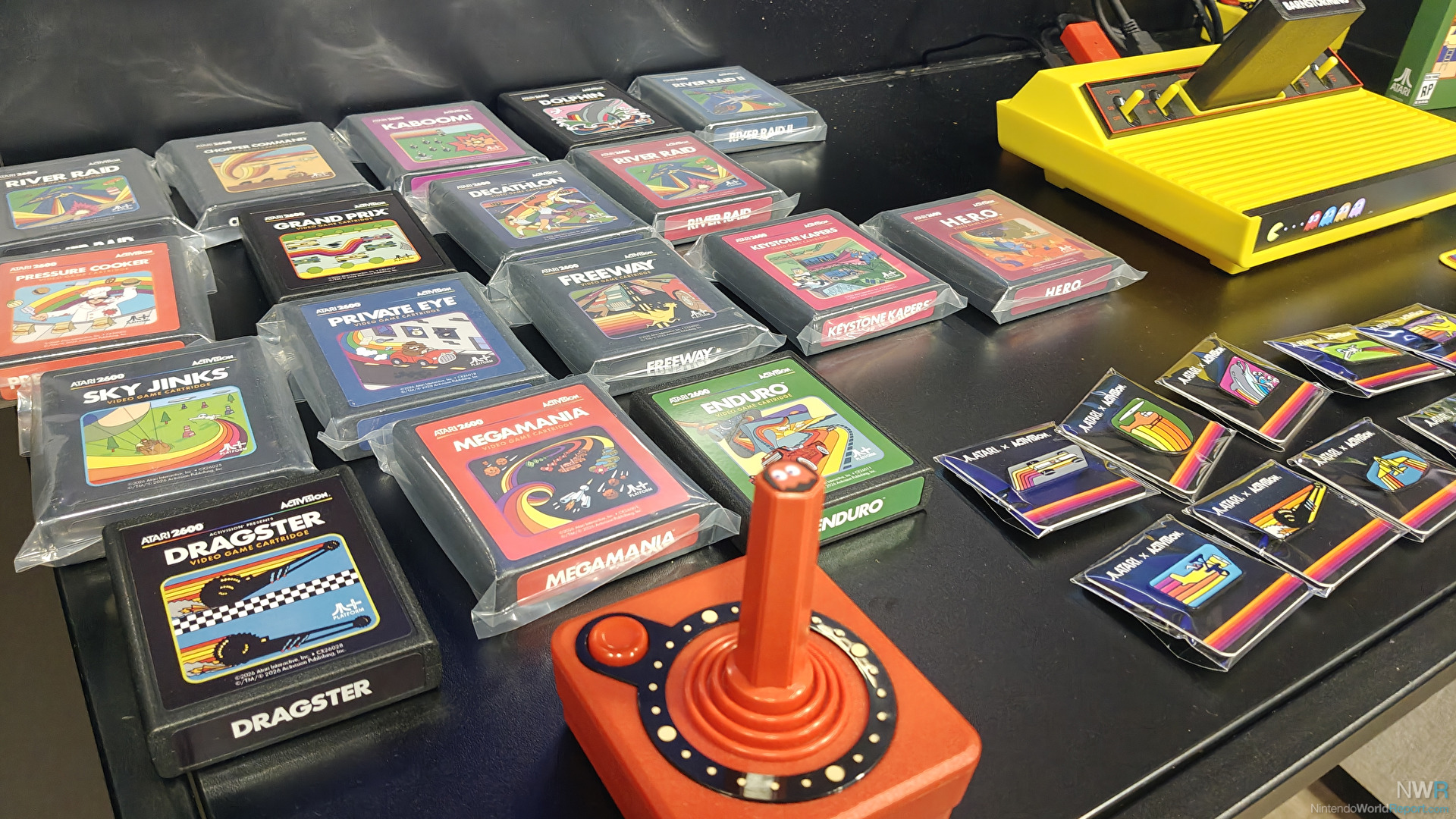
Every year I always take a moment to meet Matt from Atari who has made it his sole mission to revive the retro heart of the company. He works just on Atari 2600+. Atari7800+ and original hardware releases. So you can only imagine his excitement when he showed me the first batch lined up for the Atari X Activision collection. Something he had been working on for years. If you don’t know the history, Activision was originally founded by a group of ex-Atari developers who wanted more recognition for their work and began making their own games for the Atari 2600. They made some of the most successful games on the system, but they have been extremely hard to play in their original form. With this collection Atari is perhaps getting the last laugh, but in truth it is more of a celebration.
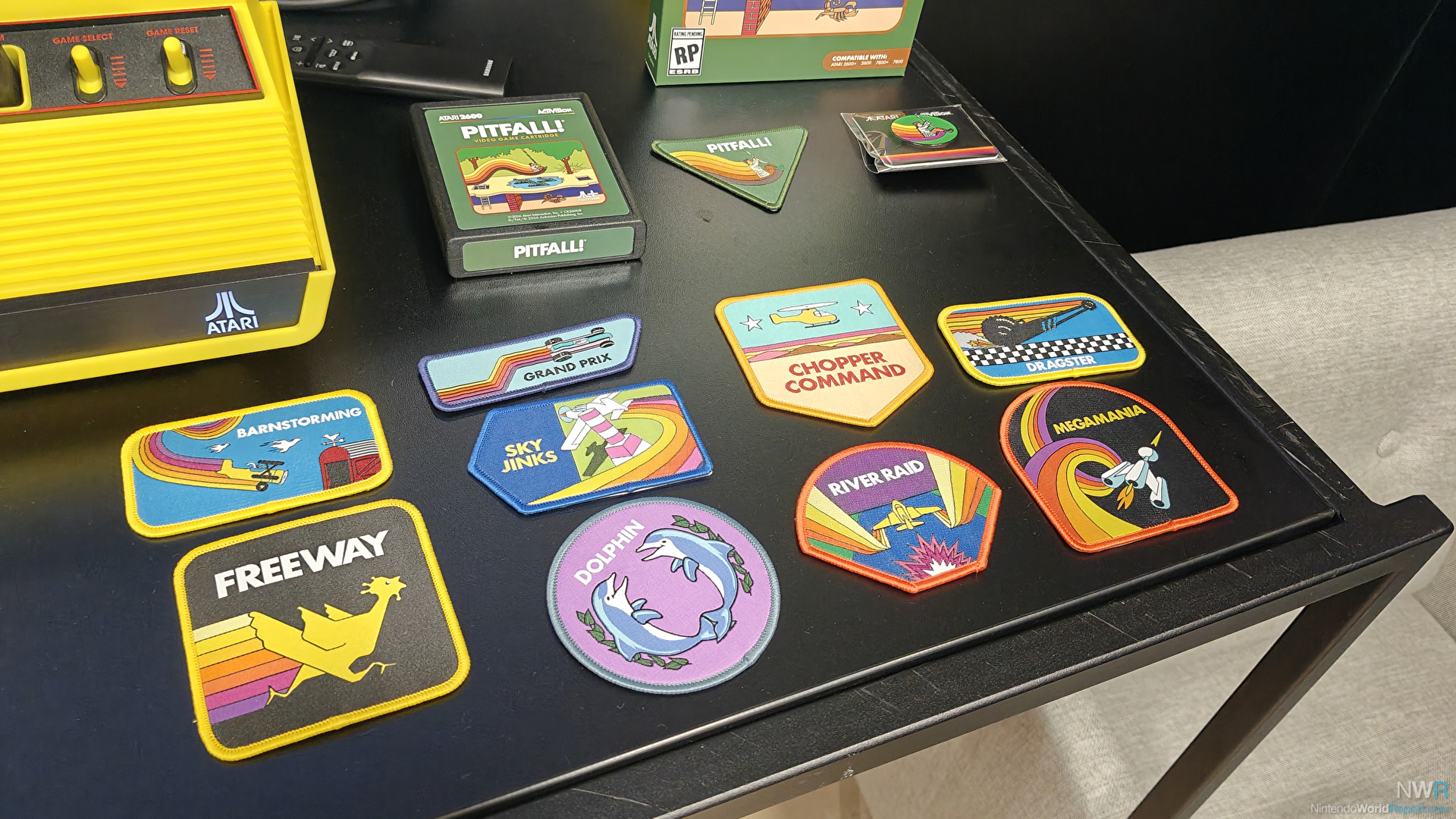
thirty-nine, yes you heard that right, thirty-nine Activision classics will come out over the coming years in both individual cartridges and deluxe bundles. Pitfall, Enduro, Megamania, Private Eye, River Raid, Kaboom! And Keystone Kapers are some of the headliners for this first collection. With others like Pitfall 2, Starmaster, Decathlon, Crackpots and Beamrider coming down the road. Each game has unified box-art that retains the original look and feel of the games. If you buy the bundle, it comes in a deluxe set that has a specially designed slipcase. One detail that I especially like is that each individual game, regardless of set, comes with an enamel pin but also a patch. For the Atari-heads that is especially significant because if you could beat the high-score from the developers included in the original manual and send a polaroid picture to Activision with your score you were sent a patch to put on a jacket. It is that attention to detail that makes me love the way that Atari is approaching these re-releases for their original and updated hardware.
This big asterisk to all this is price. We are still talking about Atari 2600 games here. Some are nearly fifty years old. Individually you buy all of these separately for about 30 USD each. Even with all the goodies included, that may still be a bridge too far for fans. While the deluxe bundles can also be spread, here the costs quickly balloon to over 200 USD. If you are an Atari-fan this is probably still something that feels like a must-have on your shelf, but for the casual audience I’m pretty sure that the value you’ll get for these games varies widely. Then again, in an era where physical media is slowly getting choked out, I love that Atari is putting in the time, attention and resources to keep these games around for their original hardware. But even for a cynic like me, who has no real nostalgia for the 2600-era of games, I must admit that these are some of the nicest physical releases I’ve seen in quite some time.
Godzilla: Destroy All Monsters Melee Remastered.
Developed by Pipeworks Software. Releasing on November 3rd for Nintendo Switch 2.
As much as I adore the big lizard, I’ll have to admit that I’ve never really played a Godzilla game. Which to me, as a massive classic Godzilla fan feels like I’ve been missing out. But after going toe-to-toe with Leon in Godzilla: Destroy All Monsters Melee - Remastered I’m pretty sure I’ve taken a crash course of the peak in 2005. This melee brawler feels like a great entry point for 3D arena fighters while a ton of movesets and treats for fans of the King of all monsters.
During our demo we were dropped straight into the action. In a one-on-one fight you can choose from a wide selection of Godzilla icons. Of course the King himself in several iterations is here, but King Ghidora, Anguirus and Gigan were all playable. Each monster comes with its own unique moveset and abilities that we quickly got the hang of. Grabbing not just the opponent, but buildings and environmental pieces can be picked up and thrown across the map as well. Charging your atomic breath or ranged attack takes time, but can really knock monsters around as well. What really struck me is that the game is a lot slower and more tactical than most fighting games I’ve played. That’s not a detriment, it makes the monsters feel weighty and true to their depiction in the film. I half expected the monsters to take off a mask and show the human performer inside the suit.
Thankfully the game leans into the weirdness of the Godzilla series. Power-ups can be picked up to unleash a supporting attack, such as Mothra when playing as Godzilla. I never felt like the fights never became too one-sided. Until the very last bit of the health bar was removed I still thought I had a chance against Leon, though ultimately his timely dodges did beat my strategy of getting up in his face. Pipeworks Software has apparently stayed as true as possible to the original design, but quite literally wrapping the code of the original into Unreal Engine 5. Making the game visually look better, but retaining that feel of the GameCube title.
In terms of modes we only got to play around with the one-on-one versus mode. Though I was told that all the original modes will make a return in this version and the game will support online gameplay as well. At the end of every match points are received that can be used to unlock new characters, stages and gallery art pieces. While there are slight tweaks and additions to the overall experience, such as a new local co-op mode and weather effects to choose from on the stages, you can pretty much expect a true to form remaster here.
And I think that emphasizes the back-to-basics approach that Pipeworks is taking here. It was so much fun to grunt and shout at each other while trying to make punches and kicks connect. We got really excited breaking through a wall of boulders and we began tossing each other into a fiery lake of magma. Game like these were great on the GameCube because of the excitement playing against your friends on the couch. Godzilla: Destroy All Monsters Melee Remastered is totally a throwback of this era of games. Without battle passes, live-services and paying for additional characters it is refreshing almost 25 years later.
RollerCoaster Tycoon: Wonderworks.
Developed by Springloaded. Release 2027 (Early Access).
I think I quite literally jumped up in excitement when I saw that Atari was finally bringing out a brand-new RollerCoaster Tycoon game. It is hard to overstate how big RCT was for PC gamers in Europe and around me growing up. RCT and RCT2 are bonafide classics and the later entries have proven that it is incredibly difficult to follow in their footsteps. So with RollerCoaster Tycoon: Wonderworks I was very pleased to hear and see the care and attention Springloaded is putting into this task. Their previous work on Let’s Build A Zoo has certainly prepared them for sim-like design, but are they up to the task to improve on greatness? After an hour of hands-on with Wonderworks I’m ready to believe that a new era of RCT is truly upon us.
So let’s begin with the big overall approach that the designers are taking with Wonderworks. This time around you are truly working on building an empire of theme parks around the world. You start out with a limited and small park with truly dingy rides and attractions. Barrels slapped on a wheel, a barn repurposed as a slide or simple wooden shacks functioning as entrances and exits. It doesn’t just emphasize that you are starting from scratch, but also gives each park a distinctive layout and challenge. But of course as your park grows you can build new coasters and attractions to attract customers.
The keyword in Wonderworks is truly ‘customization’. There was always a certain amount of control you had over individual rides and stands, but here almost everything can be tweaked. Want your coaster to have different speeds for ramps and loops? You can adjust each booster or break individually. Want your chair swing to accelerate at an intense speed? You can change it on the fly. When constructing your coaster you can enable realistic physics and get a little dummy-cart going while you are laying down the track to see if they will remain in their seats. The builder itself feels more intuitive than the original RCT if you ask me. In part because those original games were limited by their programming and we as players got so used to that particular UI that we never questioned it. But here the coaster builder automatically follows your cursor. Meaning that building corners or curves is automatically done by ‘drawing’ your track. It is something that will take some getting used to, but after ten minutes I was already using elevation, speed sections and breaks to create a pretty cool looping track. Coasters and rides can be upgraded individually, but if for some reason they end up fully destroyed, you will lose all progress for that ride. It’s a nice way to keep evolving your park long after you’ve completed the missions.
On the management side a few things work differently now too. New rides can be researched and developed with a dedicated laboratory that has to be placed inside the park. While you still get regular new rides, occasionally you may need to choose between two different ones, meaning that no park will ever really be the same. There’s also new employee categories. Concession stands are operated by park employees who will need regular breaks and energy drinks to improve their morale and serving speed. So much for locking park guests in with a soda fountain to lose, I mean spend, all their hard earned cash on. And of course, the antlike nature of park guests is still something you have full control over. Not just reading their thoughts, but of course dragging them over to their ‘last ride’. However, this time around you may actually end up getting sued by relatives over the deaths of park guests. I had a big laugh when I saw that I could hire an expert legal team that would lower the settlement fee out of court. Something we truly couldn’t imagine in the real world. Right?
The real challenge that Springloaded and Atari are faced with is a generation of players that have loved and devoured everything RCT. It’s no wonder that after the reveal trailer they received a lot of feedback from dedicated players. Therefore the game will launch first in Early Access sometime in 2027 to make sure that they can optimize and adjust the features available. While I’m not usually a big fan of Early Access, in this case it feels warranted. For example, I tried to place park benches across pathways but it removed the path instead. Placing a bench next to a path is so unintuitive to a veteran RCT player that I’m now fully on board with getting in more feedback for the team down the road. When asked about licensed rides from parks like Six Flags as the original had, the developers remain committed to their own rides and the creativity of players, but didn’t necessarily rule anything out after the game hits 1.0 down the road.
But the foundations for RCT Wonderworks do feel pretty solid. The visual style has finally found the right balance between the classic pixel art and the more dynamic 3D art for its rides and scenery. In particular it should help with terraforming and building truly absurd coasters. The worldwide angle the game takes allows for some really fun locations as well as an interconnected world. Your ambitions as a theme park tycoon are not merely limited to the boundaries of the park itself, which in turn encourages more creativity. While I’m cautious I am also very optimistic about the future of Rollercoaster Tycoon. As a series with so much potential for modern installments Wonderworks seems to put its right foot forward. With the proper guidance from players and developers willing to listen I can see this truly being the next generation of theme park management sims. Get me a fastpass for 2027 please!
Thief: The Dark Project Remastered.
Developed by Nightdive Studios. Release: Winter 2026 for Switch and Switch 2.
Among the pantheon of ‘must-play-classics’ I have yet to fully experience Thief: The Dark Project. Looking Glass Studios magnum opus, according to many, was groundbreaking in both the stealth and immersive sim genre. So who else to entrust with a full remaster than Nightdive Studios? Having played around with it for about half an hour I can say that I’m so excited to finally experience this game later this year on Switch 2. Because from what I’ve played I can tell that this game still holds up wonderfully nearly 30 years later.
As master thief Garrett you are tasked with infiltrating and stealing valuable objects from noblemen for your own personal gain. While there is a lot of story going on, my time with the demo really focused on the gameplay. A first-person stealth game is still pretty unique to this day and Thief really builds on the idea of being an immersive experience. As you sneak through towns and buildings, stealing keys and taking out guards silently, you will need to account for the environment to not get spotted. Noisy floors, lights and line of sight need to be carefully avoided if you want to be a true thief. It feels like the world of Thief lives and breathes. Guards make their rounds in distinct patterns but are easily distracted or may hunt you down if they notice something out of place. While you have a pretty big toolset of arrows and tricks at your disposal it is always better to avoid a fight if you can.
The Thief Remaster has been approached with great care by Nightdive. The basis for the title has been the Gold Edition of the game with all content being here. Elements that didn’t need any touching up have been left alone, like the stealth mechanics and the original scripts. Rather the focus has been on accessibility through a new controller-focused layout that works wonders. Using radial menus for quick interactions, triggers for combat and dedicated buttons for leaning and sneaking around, the game is in line with modern stealth games. Given how much the games industry has evolved over the decades I was astonished how quickly I managed to grasp the systems at play here. Especially as a newcomer.
Visually the textures and lighting have been reworked to feel like you remember them. Don’t expect environments to be fully reworked materials, but textures have an appropriate look. At any time you can swap between the classic and the modern visuals if you want, but I liked the look that Nightdive has gone with quite a bit. It helps to set expectations as well and lets the gameplay speak for itself. The care and attention to detail is really what sets Nightdive’s remasters apart and Thief truly is shaping up to be another notch in their belt. Small quality of life improvements like saving at any time and having fast restarts are welcome given the trickiness of getting past some of the guards.
As someone who’s been eyeing Thief: The Dark Project for the longest time on their steam wishlist, I am so happy that I can now look forward to actually playing it in 2026. The controls feel great, the original intent of the design seems to have been kept in place and the gameplay still feels in line with modern stealth titles. I’m of course very curious to see how the game will run on Switch and Switch 2 but I have confidence in Nightdive. As a fledgling thief I can’t wait to break-in my copy this winter.
It’s been a pleasure chatting with David Ventura, studio head of Ichigoichie for the past five years at Gamescom. He’s most well known for his work on Elite Beat Agents but founded his own studio in Sweden in 2018 and released Hexagroove: Tactical DJ in 2019. That passion for music-inspired games has followed the studio as they released Backbeat and also did co-development on Lumines: Arise and KORG. Their next title is Tactichord: Glam Strategy, which is a prequel for one of the characters from Backbeat.
While it retains the turn-based strategy gameplay, a lot of the mechanics have been finetuned and simplified for a more streamlined experience. I will say that as much as I liked playing Backbeat, I did struggle often with its many systems, including their in-depth timeline along which you had to position the characters and perform actions. In a sense, the dial on Tactichord has been turned back from a 9 to a 6 and that benefits the overall experience.
Following a group of characters that begin their own band, each stage sees you performing small concerts to convert your opponents (lovingly dubbed ‘haters’) into fans. While the first few stages are pretty simple, teaching you positioning and attacking opponents, the system builds over time into managing large groups of ‘haters’. One of the neat touches is that as you perform you get to pick the lyrics and playstyle of the band members, culminating in a final song that wins over the crowd after the battle is concluded. I think that for newcomers to turn-based strategy games, this is a great introduction with elements from Into the Breach and Fire Emblem mixed up in an urban visual style that ties the story together nicely.
If anything, events like these are very hard for someone to get to grips with strategy games. This genre often requires care and attention that cannot be squeezed into a little under thirty minutes. But Tactichord honestly feels kind of perfect for that pick-up-and-play session. The game already looks a lot better than the last time I tried it a little over a year ago and I can finally see all the elements taking shape. While the team still has a lot of work to do, this is one that should absolutely make it on your wishlist if you like a bit of glam metal in your tactical adventure. There's also a free demo out on Steam.
I gotta admit, I think Turok is a bit of a weird series. While I can see how it was groundbreaking for the first-person shooters on console, coming out so shortly after both Quake and Goldeneye, there has never really been a reason for me to get into the series. Pretty much all I knew was that it was a pretty convoluted series where you shoot both dinosaurs and aliens, occasionally with a bow. But that hasn’t stopped Saber Interactive from going all in on a completely new and original game with Turok: Origins. At Gamescom, I got to go hands-on for about 30 minutes and got to speak to one of the developers afterwards as well. I still can’t judge whether Turok: Origins is finally getting me on board, but at the very least it seems to be taking a big swing.
Check out our video preview of Turok: Origins above, which also includes a developer interview with the game's lead designer.
In the long lasting war between the Turok and an invading alien species, you enter the war as one of the chosen warriors. The demo saw me playing a training mission designed to prove my character’s worth as one of the Turok. Structurally the game can be played in both single player and with two others in co-op. Each of its three classes come with their own skills and weapons. I gravitated towards the ‘Raven’ who plays more like a support class who can stop enemies in their tracks, heal allies and fire homing missiles as special attacks. There were three main weapons to choose from: a bow, a laser rifle and a heavy rocket launcher. Each of the weapons felt pretty great to control and provided some strategic advantage against the onslaught of both dinosaurs and aliens.
As I set out across the Lost Lands I was tasked with running to several points to prevent the amassing enemies from reaching our base. Or finding artefacts? Truth be told, as much as the opening cutscene emphasized the epic story going on, it kind of blew past me. Perhaps it was that I was funnelled into a demo, but I also wasn’t expecting to be bombarded with sci-fi mumbo jumbo from the word go. I can see how the team wants to set up this elaborate universe, but it was also quite a bit to take in. Thankfully during the gameplay itself this all washed away quite easily. Controls are smooth and feel like a modern action game. One of the best features is that you can swap between third and first-person with the press of a button. For most of my encounters with regular enemies, the first-person camera proved vital. However, in the boss battle against a massive augmented T-Rex, I switched to third-person to dodge incoming bites and swipes from the beast.
Keeping track of enemies in the thick jungle was quite difficult. Relying on a scan ability provided me with their outline. While the group next to me was playing in co-op, I was playing the game on Switch 2 in single player. The final game will have crossplay with other versions and judging by the arenas I was fighting in, I can see how this will be the main draw for a lot of players. I wasn’t paired up with any NPCs and it could get quite hectic and overwhelming fighting off the hordes of enemies. In a sense it made combat feel quite tight, but it also revealed how linear my progression truly was. Go to this area, interact with this object, take down these two enemies and go back around to open a gate: it all felt pretty formulaic. I wasn’t having a bad time, but near the end of my demo it did feel a bit like a drag.
What was not a drag was the performance on Switch 2. While some of the rendered textures and environments in the jungle were clearly a bit rough, the game remained stable throughout. Particle and VFX effects looked great even, with the jungle getting its fair share of weather effects and enemies looking great and imposing when needed. The game will be locked at 30FPS, but given you can still play with friends on other platforms that should be a compromise I am willing to live with. Especially if you also want to play the game by yourself for the story.
I think Turok: Origins will be somewhat of a departure for fans of the original games. But I also suspect that is a good thing. With Origins, the team at Saber is going for a new approach to the series and setting up a grand sci-fi story. Though it is clear that at its heart, Turok: Origins is designed for a co-op experience. Perhaps that is the new distinction that sets the series apart for the future. Not just dinosaurs, but a gameplay loop and world you can explore with your friends. For now, the Switch 2 version seems like a fine way to experience Turok: Origins, but I remain curious to see how the game breaks up its structure and encounters during this origin story.
Back in December 2021 I reviewed The Procession to Calvary, a game by solo developer Joe Richardson that hooked me with its unique presentation, while also combining point-and-click adventure-style storytelling with collage-like mashups of classical paintings. I’ll admit that when I gave the game an 8 I wasn’t expecting it to linger in my mind for as long as it did. Ever since, I’ve been awaiting his next title, which ended up becoming Death of the Reprobate. Now bundled together with Four Last Things and The Procession to Calvary, The Immortal John Triptych is an excellent collection that bursts not only through the fourth wall, but from your abdomen by making you laugh as well.
While the three titles can be enjoyed as standalone experiences, having the trio of them right next to each other highlights not only the connective tissues between them, but is a wonderful showcase for the improving talent of Joe Richardson as well. In each of the games you play as a person who is sent out across European-styled towns and forests to appease people in power. In the first game it is quite literally to receive salvation for the sins you have committed, while the second game sees you setting out on murdering the heavenly leader of the previous regime. Finally in Death of the Reprobate, you play as the son of Immortal John, who has to commit seven good deeds.
Each game sees you solving a series of quests for the strange inhabitants of these places. Examples include trying to figure out how to commit the sin of lust by besting the ‘pie-King’ in an pie-eating-contest, and learning the names of ten different birds so that you can spot them for the local hunter. Each scenario is delightfully weird and absurd in both the presentation and writing.
Previously I compared the writing to Monty Python. While I still stand by this, I think that I undersold the visual style in my original review. The more I played this trilogy, the more I was impressed and charmed by the way characters and the world interact. The animations are quite simple, but especially in Death of the Reprobate there is so much movement going on in both the background and foreground that the world truly comes to life.
I found it especially fun to try and spot where different paintings were mashed together to create its settings. The way the characters interact often made me chuckle, like the dry responses to interactions or the sheer shattering of the fourth wall. Comments on the game’s creation or interaction with its systems are often pointed out by in-game characters and it always fits the tone of the game wonderfully.
There is still the issue that you will be walking back and forth quite a lot for trivial quests or gathering information. It is especially notable in Four Last Things and Procession to Calvary, where the logic to solving certain puzzles can be incredibly far-fetched, which forced me to resort to an online guide. On the other hand, I did have a laugh that Death of the Reprobate overcorrects this problem with God literally pointing out who to help and a guide that explains the detail of every puzzle. These are always optional, of course, but you will need to adjust your mindset to traditional point-and-click logic from time to time.
For Switch 2 owners, unfortunately this is a point-and-click-adventure that will not support your Joy-Con 2 controller doing the point-and-clicking via mouse mode. That said, the overall controls have been improved over the earlier games. It still plays great on Switch 2 in both handheld and docked.
Finally I want to shout out some of the special features included in this package. There are a couple of behind the scenes videos showcasing how the world was designed. As someone working in preservation it is always a treat to get some insight into the creation of a game and here I was awestruck to see the sheer number of hours Richardson has put into the creation of his worlds. You may think these backgrounds are simple mashups of two paintings, but the meticulous attention to detail is wonderfully captured in these videos. There are even a few interactive bonuses that share commentary from Joe himself about why they were cut.
All in all, The Immortal John Triptych was a delight to play through. It was great getting to finally play Four Last Things and Death of the Reprobate. Returning to Procession to Calvary, which I probably would’ve skipped if it wasn’t part of this trilogy, was also a fun time. I blasted through the games in a short weekend and that was just perfect to see everything this tale has to offer. For point-and-click lovers, this title is a no brainer to pick up. The fun writing, the creativity with the visual style and the overall package are tremendous fun. Seeing it all concluded in Death of the Reprobate felt appropriate and made me even more excited to see what Joe Richardson will be cooking up next. To me, it isn’t just John that this trilogy has made immortal. Well done Joe, well done.
What’s left to say about Capcom at this point? The studio has been on a pretty massive win streak ever since Resident Evil: Biohazard and the introduction of their RE Engine. Their games have been technically impressive but above all a ton of fun. So seeing Onimusha, a fairly obscure series by all measures, getting the full revival treatment was quite a surprise. Given we’ve had a myriad of samurai games over the last five years I wasn’t entirely sure going into Onimusha: Way of the Sword what we could expect. I’m therefore very happy to report that this is one of the most fun AAA action games I’ve played in quite some time. Even better? The Switch 2 version met all my expectations and more.
The wandering samurai, Miyamoto Mushashi, is looking for a way to increase his strength. After challenging the head of a Samurai clan he gets more than what he bargained for and is killed by creatures from hell called Genma. However, death seems to not be the end of his story as he wakes up with a mysterious gauntlet on his wrist that keeps him alive. By draining souls from the Genma, Mushashi sets out to find a way to get rid of the gauntlet and recover his humanity. As the story progresses he meets a band of Samurai that are trying to protect the world from the invasion from Hell by using their Oni-powers. The story takes quite a while to kick into gear, but by the end I came to adore Mushashi and his friends. His cocky attitude slowly making way to realize his place in the world and how he finds strength is an old story, but it is told quite well because of its slower pace.
That slow pace is something you will not find in combat, where Onimusha truly excels. The game focuses on melee swordfighting with a combination of light and heavy attacks. The real trick is getting the timing of your blocks, parries, and ‘Issen’ correct. A well placed Issen functions as a slicing counter before your opponent’s attack can connect while dealing massive damage to both their health and stamina bar. For each hit you are also given souls that can increase your special attacks, like the oni garments, that can bring down an enemy's stamina bar. For bosses this is the moment to unleash a devastating attack for either damage or replenishing your souls. As you time your parries better later on, you can enhance your blade with a burning attack. Combat becomes a dance of reacting to your enemies while also keeping an eye on these meters at once. It is without a doubt overwhelming at first, but once the muscle memory kicks in it is simply exhilarating.
That is best demonstrated by the amazing array of boss fights. Monstrous in their design, but deadly in their flurry of attacks. Some are massive hulking beasts that run at you and you’ll need to dodge out of the way. While others are more precise and require their armor to be knocked off. Their creative designs and varied attacks always kept me on my toes. I was certain that some would be unbeatable. But learning their patterns, timing my attacks right and slowly chipping away at their health bars was where the game undoubtedly shines the brightest.
I should also give any newcomer the immediate advice of enabling the ‘action prompts’ in the menu, regardless of which difficulty you choose. By default these are disabled unless you play on the easier ‘story mode’ of the game. They show you which attack to perform to break the defense of your opponent. At first this feels overpowered. Knowing immediately how to get past a one-on-one encounter. But in truth, the difficulty ramps up fairly quickly and this system gets you adjusted much easier. By the end it didn’t feel like an easy mode whatsoever but rather the best way to play the game.
In between all these action moments you get plenty of time to explore the Edo-era of Kyoto. None of the glamorous temples and buildings are there, given the sheer destruction from the Genma forces. But don’t be misled, because the art direction is fantastic. There is some phenomenal body horror on display here. With blood splashing from the screen and dismemberments as far as the eye can see. From the gruesome towers of corpses to literal rivers of blood, until you purify certain areas of Kyoto there is not a moment of respite for Musashi and his allies. Using spirit mirrors you can not only upgrade your gear and abilities, but also travel to other areas. Trading in Kyoto for creepy woods, stunning mountain vistas, and an underground imperial palace filled to the brim with monstrous creatures, Onimusha upstages modern Resident Evil in its horror for me.
Switch 2 owners can sigh relief, because all these elements are rendered pretty wonderfully on both the big screen and in portable mode. With the framerate unlocked I always felt like the game ran a little bit smoother but didn’t really compromise on its fidelity. Details like hair and facial features, in particular those of non-vital NPC’s have been hit the hardest, but while playing it all feels and looks so good. I didn’t bother with the Switch 2 exclusive motion controls, where a horizontal swipe is a light attack and a vertical shake is a heavy attack. But gyro aiming is here for controlling the bow, which is quite helpful. I played about an equal amount of the game in both docked and handheld and I genuinely had a great time either way. Simply put, this is another fantastic Capcom port that if you’re bound to the Switch 2 does not disappoint in the slightest.
If anything, my biggest gripe is that the game’s pacing takes quite a long time to get in gear. The opening saw me watching over twenty minutes of cutscenes for characters I didn’t connect with. The explanations of mechanics like the Issen aren’t done wonderfully, forcing me to rely mostly on parries and blocks for the first half of the game. And I think that while there are a lot of side-activities, some of them simply resolve by going in a very linear fashion from point A to B to C. With how engaging the main missions and combat mechanics are, it can sometimes feel like the developers were stretching how many hours you can put into the game. In that sense I preferred the more limited, but more rewarding side stories from Pragmata earlier this year.
I cannot describe Onimusha: Way of the Sword as anything other than a massive surprise. While I have dabbled in the occasional soulslike-action game, Onimusha’s mechanics feel rewarding whether you are a newcomer or expert in this particular genre. Overall it leans more towards the Jedi: Fallen Order scale than Sekiro, but Onimusha’s unique blend of horror, Japanese mythology and visual style absolutely set it apart. I kept coming back for more battles and pushing myself to beat the bosses even though I fell over and over again. Onimusha has found its way of the sword by balancing on the edge of this phenomenally well crafted blade. It once again shows that Capcom remains on top of its game.
Stop. Look. You know, before I say the words. Take a moment. Breathe in. Breath out. We good? Okay. We good. So Montabi is a roguelike deckbuilder. While I hope that I’ve not remained with just fans of this particular genre, I want to make it clear that I am pretty firmly burned out on the Roguelike and Roguelite categories. Call it the reviewer’s curse. While I can see from a design perspective, this genre is enticing to a lot of developers and players. As someone who has played so many run-based titles in the last few years, I am frankly over the novelty. That said, I have to give it to Montabi. Its blend of strategic gameplay, reminiscent of Mega Man: Battle Network, Pokémon and deckbuilding had me coming back to it again and again. Completing multiple successful runs and still finding interesting combinations and Montabi creatures, this is an unexpected hit for me in a packed year.
From the get go, Montabi is pretty unashamed of its inspirations. In a society where people and mysterious monsters called Montabi live together, you play as a teenager whose Montabi gets stolen by Team X. Setting out with a starter Montabi you begin fighting rogue Montabi and adding them to your team. Each creature comes with its own unique playstyle as well as a trainer who has to support them in fights. As you progress through the city, you can find equipment and charms, and increase the potential of your deck with stickers. Level up enough and your Montabi will evolve into a stronger version of itself and gain new passive abilities.
Fights take place on a 3x6 grid where you can place your trainer and Montabi, as well as keep a few in reserve to switch out. To perform actions you play cards. As I said, each Montabi also fights differently. Some use special techniques such as causing bleeding that will damage an opponent whenever they take an action. Others place traps and pickups that increase in strength the longer they are down. Yet others rely on discarding cards for increasing the damage output on their other cards. Every one of my runs I made the attempt to try new combinations, and they are wonderfully balanced. I never felt like I could rely only on a single technique and finding the synergies between different Montabi always felt satisfying, especially when I unlocked different trainers, such as the fighter who basically became my glass cannon alongside their creatures.
What makes it all fall into place is the fact that your opponent’s upcoming attacks are clearly communicated and telegraphed–both on the field and in their attack descriptions–so you can plan ahead without any uncertainty. Positioning is key and occasionally just swapping out a Montabi that gets targeted by all enemies can turn the tide of battle. Battles become these strategic chess matches, in a similar way to Fire Emblem or X-COM. Though one major gripe I have is that your on screen cursor can be too easy to lose track of. Planning is essential, as your creatures aren’t healed between fights. While pickups and items can be used to heal for small amounts, it is sometimes best to stack up on armor or have just a single Montabi tank the damage so you strike back hard against these bosses. The bosses are true tests of your skill and I liked their use of different mechanics. Whether they simply boost themselves to deal massive damage if you leave them unattended, or they are all about supporting their own Montabi to create an attack on two fronts.
One of my problems with most Roguelikes/Roguelites is that boss encounters in particular can feel cheap: a critical hit there, an unavoidable pattern that you haven’t encountered before or even dying just before landing your final blow. It makes the genre so susceptible to ‘ragequit’ and is one of the reasons why I’ve lost my appetite for games that look cool, but turn out to adhere to the Roguelike template. Yet, Montabi is a delicate balancing act. All the information, at any time, is there on screen for you to react to. Frankly, there were times where I almost gave up during an elite or a boss encounter, because they seemed so overpowered. Yet, just keeping my strategy going, focusing on dodging the right attacks and slowly chipping away at their defenses got me through these ‘impossible’ encounters. That’s pretty impressive game design, especially from a debut studio.
That being said, as much as I adore the gameplay, the worldbuilding and design of Montabi left me unimpressed. It is so hard to play with these particular tropes and not have the final result be compared to Pokémon. I think it is a trap that indie teams looking to make their own take on Pokémon often fall into. The secret of why Pokémon works so well, is that you as a trainer get attached to your creature because you also spend time with them outside of battle. Montabi leaves very little room for this. It implies this city lives in harmony with these creatures, but all of this is communicated through text and background details. I had no moment where I considered my Taxi-cab bug to be anything other than a good armor-stack deck. It would've been more fun if the way I used my Montabi had them develop little personality traits. I do like that there’s a lot of creative designs to the human characters and a real inclusivity to the world. But the story and world end up becoming mostly background noise. That goes too for the soundtrack, which becomes fairly repetitive, making me want to put on my own soundtrack or a video in the background instead.
Still, Montabi was a delightful surprise. When I realized I had to deal with another roguelike deckbuilder, my heart sank. Thankfully its strong game design and strategic approach to the genre kept me coming back again and again. I think that this game lays out a strong foundation to improve upon, especially in giving its titular creatures a more defined personality and broadening the tactical synergies between them. The story, music and characters aren’t anything to write home about. Yet in the end I still had a pretty great time with Montabi. Its gameplay loop feels like the right fit for a Roguelike game. While I still stand by the fact that I’m over these types of games, Montabi deserves its spot among some of the best this genre has to offer.
Ask me on the right day and I may tell you that The Legend of Zelda: Ocarina of Time is my favorite game of all time. While I wasn’t there when it launched on N64 and revolutionized games, I wasn’t that far behind. I’ve often told the story of how I received a Nintendo GameCube from my parents on Christmas, possibly in November 2004. It was the Mario Kart: Double Dash!! And The Legend of Zelda: Collector’s Edition combo-pack, which included the famed game we’re talking about today. In part, one of the reasons I learned English at a young age was because I had to translate an English strategy guide to finish the game–that and getting over my fear of ReDeads underneath Kakariko Graveyard. My love for games and the world of Hyrule have been intertwined ever since the day I first saw Link riding Epona through a moonlit Hyrule field on that opening screen.
Since then I’ve returned to this iteration of Hyrule countless times, primarily through the many official rereleases that Nintendo has been eager to provide us with. Sometimes I’d take my time and explore a bit more of the world but doing a full 100% completionist run has been rare even for me. I’ve beaten the game more times than I can count, yet it wasn’t until a few years ago that I truly put in the time to get to know Ocarina of Time. And in a way that Nintendo themselves had never considered. I discovered the randomizer.
For many, this isn’t a new concept. A randomizer refers to a modified version of a game in which the items, locations and interactions that you as a player need to progress have been swapped around. Zelda has the most clear cut examples of a randomizer you can think of. Treasure chests have had their contents swapped; where you may originally have found five rupees in one of the houses in Kokiri forest, now you may stumble upon the Hookshot at the very beginning of the game. Basically how this works is that every object in the game is indexed to be a certain type of ‘lock’ that requires a ‘key’ from the player to access. Take, for example, the eye-switches, which can open doors when shot with your slingshot or bow and arrow. However, in a randomizer you often have to rely on different techniques or routes to find your slingshot. In its most vanilla form, you will still play the game from beginning to end, but may have some keys and items swapped around within their own dungeons. But the true fun for me began when I enabled ‘skullsanity’ and several other toggles in one of my first randomized runs. Swapping any and all items in the itempool with the possibility of also being held by the golden skulltulas.
As you can imagine, this changes your approach for finishing Ocarina of Time drastically. You need to run around across Hyrule field like a maniac trying to find any and all chests and ways to proceed. The density of these modes is crazy. Randomizers may include brand new items, such as having to find the individual directional buttons on the Ocarina itself (meaning you cannot play certain songs) or even putting the action buttons themselves in the movepool (good luck beating the Shadow temple with only two C-items). This isn’t as awful as you may think. Knowing every single detail in Ocarina of Time would require brainspace that most of us do not have. Therefore most randomizers have an automatic checklist included. When entering a certain area, you may get an indication of what items could be found there; this is helpful when you find a skulltula and cannot reach its item drop until you find the boomerang fifteen hours later.
But this piece isn’t necessarily about randomizers themselves. They’ve been around for far longer than Ocarina of Time and span a wide variety of games. What I want to talk about is how the Ocarina of Time randomizer made me fall in love with this version of Hyrule all over again. While A Link to the Past, and even the original Legend of Zelda, had a pretty massive open world, Hyrule in Ocarina of Time is pretty distinctive, in part, sold by that grand sense of adventure. Being able to go into any direction in a 3D environment still feels exciting 28 years later. While the plot beats are pretty universal, going from Kokiri Forest to Death Mountain to Zora’s Domain etc., there are so many interactions in between saving Hyrule and figuring out the dungeons that often get overlooked.
The fandom in particular has latched onto Majora’s Mask over the past decade or so. I don’t blame them, Majora’s Mask has some of the finest character work and writing in the entire Zelda series. But thanks to my experience with those randomizers, I finally had to take my time to truly explore every nook and cranny of Hyrule. Speaking with every NPC and learning that their side-stories and schedules, while perhaps not as impactful as those in Termina, still contributed to that feeling of adventure. I never realized that Talon gets tossed out into a random house in Kakariko Village after Ganondorf takes over. I always assumed he had been imprisoned somewhere. Or how about the side-alley in Hyrule Castle Town? There’s even a shop there that sells Bombchus at night. In a regular run of the game, you have almost nothing to gain there, but in a randomizer this could be an essential shopkeeper. What if now the rich lady gives you an important item when returning her dog?
You may think me crazy for never having noticed these interactions, but I think that is truly the magic of Zelda games. All these little elements that the game does not tell you about, but reinforce the idea that this is a living world. Even better, you may have only known about these details because some friend at school showed them to you. It calls to mind that lost ‘playground rumor’ effect that, for many, had faded away from the series till Breath of the Wild came along. Yet in these randomized runs, it is almost virtually impossible to reach Ganon’s castle without this knowledge. Whether you learn it from keeping track with the checklist or you have to resort to a guide, these moments are still there waiting for you all these decades later.
And for me, the randomizer and this requisite knowledge reignited my love for Ocarina of Time. I was taking moments to appreciate and love its world even more. Whether it was seeing that sun going down waiting for a Gold Skulltula to spawn in, or talking with shopkeepers I never had to visit before in order to purchase an item for a trading quest or to open up a new pathway. And if it wasn’t that, the randomizer made encounters with required characters surprisingly tense. Would King Zora provide me with something useful after scooting over for 30 seconds? Was the reward for retrieving the chickens in Kakariko worth it? And not to mention those 100 hidden Golden Skulltulas themselves. Learning where they were all hiding out and even how to lure some of them from their buried hiding places was something I never had done before. It made this world feel that much more cohesive even with everything feeling out of place.
While it would be a dream come true if Nintendo were to implement something of a randomizer in their upcoming Ocarina of Time Remake, I think the extent of what Nintendo is willing to change up can be found in the Master Quest. Within the constraint of its dungeons, that flexibility feels appropriate for the conservative nature of the company. Frankly, the efforts with projects like Ship of Harkonian, the name given to the recompiled version of Ocarina of Time that enabled porting the game PC and other devices, have already done wonders for the randomizer community. The tweaks and settings for generating your own randomized seed, as well as quality of life changes to the overall Ocarina of Time gameplay and mods make it the easiest way to return to Hyrule again and again. It is especially a pleasure on Steam Deck or using portable emulated methods given the flexibility of Ship of Harkonian.
But even if Nintendo gives us about as faithful a remake as the new Ocarina of Time can be, it will still be a joy for me to revisit this world again in its ‘pure’ form. Deploying the knowledge, tricks and skills I’ve developed on my many randomized adventures is something that I am incredibly excited about. Perhaps there may even be changes or additions that will inspire future randomizers.
Ocarina of Time is perhaps no longer ‘the greatest game of all time’. But as I’ve explored this version of Hyrule again and again throughout my life, its importance has grown alongside me. Exploring Hyrule for the very first time while translating strategy guides; defeating Ganon after, literal, years alongside my best friend; returning to Ocarina of Time on the Nintendo Wii with virtual console and seeing the flaws as an angsty teenager; bringing the game with me everywhere I went on my 3DS and trying to understand why it had lingered in my mind for so long: all of these led up to a memorable new opportunity. This was challenging myself by trying to finish my first randomized run and encountering new tales hidden all across Hyrule as a grown adult while indulging in that sweet nostalgia. And now, as a new iteration comes out in 2026, I’m growing as a person with all these different worldviews and experiences. Ocarina of Time has always been there for me and many others. It is like Sheik says to a lost and confused Link on a quest to save his world:
“It is something that grows over time. A true friendship. A feeling in the heart that becomes even stronger over time. The passion of friendship will soon blossom into a righteous power and through it, you will know which way to go.”
Ocarina of Time, my old friend, I cannot wait to see where we will go next.
We’re long past the peak of Suica game. The mobile title that took the world by storm a few years back didn’t manage to retain its pop culture relevance beyond a few weeks. So obviously, Namco, famous for capitalizing on its own pop culture relevance, is giving it another shot with NAMCO LEGENDARY Mountains. With a voxel-aesthetic and a few small tweaks, this is an easy pick-up-and-play puzzle game whether you’re familiar with Namco characters or not.
Each stage is presented as a small bowl. In a loop around the gameplay area, you can toss in orbs containing different voxel characters of classic Namco series. DigDug, Pac-Man, Mappy and Xevious are all present. On top of the screen, there’s a reference to see which orbs need to collide in order to grow into the next phase. Your goal is to keep evolving your orbs to even bigger sizes and avoid them tumbling over the edge. While you can rotate and slightly adjust your angle, I was often struggling with the fact that the camera was locked to the horizontal axis. While there is an indicator for the arc of your throw, it is hard to judge where exactly your orb will land, causing me to lose a good run more often than not. While the Namco aesthetic is pretty fun, it did get a bit too repetitive for me after a while. Depending on the stage, your music and character-roster changes around. In Pac-Man you’ll have to endure the main Pac-Man theme for possibly tens of minutes as you stack up the fruits and ghosts. I do think it is fun that as you keep playing more stages are unlocked, and in particular that you unlock new voxel versions of Namco characters. You can even change the evolution tree to your liking. Want to only have DigDug enemies that slowly blow up? You can manually adjust these as you please. There’s even a little diorama mode to showcase the voxel in a scene, which is cute but nothing too exciting.
Overall NAMCO LEGENDARY Mountains is a neat twist on the Suica game formula. But the presentation is a bit of a mess. Menus are simple, the voxel characters are pretty static and the music gets repetitive fast. However, I cannot deny that I was hooked by the gameplay. Booting it up during short breaks or to have something to play casually while listening to a podcast was fun. It tickles my brain just enough to stay engaged while also being able to zone out for a bit. That does, however, apply to pretty much all Suica-like games. The choice for voxels is a bit of a double edged sword, given the limited field of view and input. Still if you dig a retro feel and some casual gameplay, NAMCO LEGENDARY Mountains is an easy hill to recommend and return to more often than you may expect.
The best thing about indie games is that you can often sense when developers are inspired by other games to make something they truly love. SFB Games have been on a roll over the past decade or so with Snipperclips and Crow Country. But I truly fell in love with their work when I played the 3rd installment of their Detective Grimoire series, Tangle Tower. Now, Detective Grimoire and Sally are back in The Mermaid Mask. This detective is everything mystery, puzzle and narrative fans could hope for. A tightly woven story with some absolutely gorgeous visuals, this is one you shouldn’t overlook.
Waking up in the abandoned Stonetop Inn, Detective Grimoire and Sally are called in by the captain of a mysterious submarine called the Mortuga Submarine, which has recently turned into a crime scene for the murder of its previous captain, Magnus Mortuga. It is the detectives’ job to hunt for clues, interview all the suspects and discover the secrets aboard the submarine. All the while, an ominous feeling hangs in the air, given the eclectic nature of its inhabitants.
The visuals are immediately striking, retaining the gorgeous palette and animation style from the previous game, but updating it in subtle ways. It’s endearing to notice the manner in which the nervous writer J.D. Wirman hunches over as he polishes his glasses, the joyful motions of the strange salesman Mr. Gripp and the slow and imposing figure of Dr. Zephyr. Each character is performed astonishingly well: from the little intonations to the way these characters feel like fully realized people. All the dialogue is voiced and it never ceased to amaze me. The way in which Grimoire and Sally react to objects around the submarine and their little jokes are especially funny. That goes doubly so for the writing overall, perfectly nailing the tone, character and mannerisms of everyone you come across on the adventure. So much so that by the end I secretly didn’t even want to figure out who the culprit was, because I was so endeared to everyone on board. And yet even then the game manages to beautifully subvert expectations.
Structurally, I also found the locations to be a lot more fun to explore. While the submarine isn’t as large as the Tangle Tower, the way in which its rooms are interconnected is easy to keep track of. The game also has a great hint system, which is always optional but doesn’t spoil the required clue immediately. Each location hides several items and objects you can present to the crew of the Mortuga submarine. Their responses are noted alongside the clues so you can easily refer to vital evidence for your investigation. Often clues are used in multiple ways and unlock new items or information. I never found them to be too strained or tedious to put together. Only once did I fall into the trap of having to present every item in my inventory to proceed in the investigation. Even then, I probably could’ve figured it out with all the information the game provides you with.
In between finding the items, you will have to solve little puzzles. These are all different in design from one another. Some see you positioning pieces on a board; others want you to twist and turn dials to recreate patterns and even others are about sharp observation. Presenting the solution is easy and if you do not figure it out, a remark from Sally may point you in the right direction. It’s the perfect amount of puzzles to break up the exploration and the narrative to satisfy the reward of being able to proceed with a new clue in hand. It’s at this moment that I realized every character and room had their own musical theme, which are all fantastic as well.
The Mermaid Mask’s parts all add up to this wonderful narrative with its own identity and a cast of characters that I loved to spend time with. While the ending could’ve been a bit more involved for my taste, I did like that it left me with a bittersweet feeling. That’s not something every mystery game is able to pull off, but it felt right for this particular tale. It adds to the strength of these characters that I felt satisfied leaving them in this particular place, even though I wanted to see more of them. I think that’s the mark of great writing: something that is thought provoking and allows you for a moment to inhabit a character or view the world through a different lens. It is so hard to weave a compelling mystery adventure but SFB Games have simply struck gold with this fourth Detective Grimoire adventure. The passion for their work oozes from the game and I think it is impossible to not love all of these characters. Frankly I cannot wait to see them return to the world of Detective Grimoire. But until then, The Mermaid Mask is a must for anyone looking to dive into the weekend with an engrossing mystery experience.
Nintendo and Koei Tecmo confirmed today that the smash hit Pokopia will be getting several updates with both free and paid downloadable content. In the first free update you gain access to the move dive, which allows you to explore undersea habitats and expand the towns underwater. The free update will be available in August.
Alongside this free update a paid Expansion Pass was announced, consisting of three parts. The first party, Bubbly Basin has an underwater town to explore with new pokémon such as Popplio, Corphish and Mudkip. New furniture and structures will also be available. To access this DLC you will need to learn the move dive and have completed the request 'Raise the Environment level!' inthe Bleak Beach region of the game. The Expansion pass will have two future parts. The second part will include additional new features and is scheduled for late 2026. The third part has an additional new town and will be available sometime in 2027. Finally the trailer teased the appearance of the Mythical Pokémon Manaphy. The Pokémon Pokopia Expansion pass can be pre-ordered today from the Nintendo eShop. The DLC cannot be purchased seperately. If you purchase the Expansion pass you will also get access to the Dynamic Ditto print recipe at the workbench and claim 30 pieces of Rare Pokémetal. This code can be claimed till August 31st 2027 and redeemed till September 30th 2027.
During today's Nintendo Direct, Square-Enix confirmed that all previously released Kingdom Hearts games will be coming to Nintendo Switch 2 as native ports. Spread across three collections, dubbed Kingdom Hearts Collection [I~III] contains Kingdom Hearts 1.5+2.5 Final Remix, Kingdom Hearts HD 2.8 Final Chapter Prologue and Kingdom Hearts III + Re:Mind. You can purchase these collections separately through the Nintendo eShop and the games will be released on October 8th 2026.
In a surpising twist it was also announced that Kingdom Hearts IV will launch on Nintendo Switch 2 alongside the other console versions of the game. Kingdom Hearts IV was revealed back in April 2022. Since then no news on the game was announced. The trailer today showcased new footage of the game. Including combat segments and some returning familiar faces from the Kingdom Hearts universe. No date was announced.
I binged Mixtape in a single night. That is not necessarily uncommon for me to do with shorter games. But in some sense, it feels like the perfect way to experience Mixtape. A hazy collection of vibes, strung together by a pretty fantastic, licensed soundtrack and some wonderful performances. Yet, by the next morning I wasn't quite sure how to feel about Mixtape. I adore narrative adventure games but Mixtape revels in its own nostalgia so much that without that particular context the game rings quite hollow. Much like the adolescents at the heart of its story, it could’ve done with a little more growing up.
Mixtape is the latest title from Beethoven and Dinosaur, best known for their previous artistic endeavor ‘The Artful Escape”. In Mixtape you play as Stacey Rockford, a rebellious teenager who has her mind set on becoming a Music Supervisor. Given her gift of always knowing what song to put on for the ideal mood. In order to pursue this dream, she will be leaving for New York the very next day. Much to the dismay of her best friends Van and Cassandra. Planning to make this last day memorable, the group sets out to find a stash of booze for one hell of a party. Along the way plenty of drama and backstory shows how the three became friends and what may become of the group after Stacey’s departure.
The game plays out like a series of short vignettes as Stacey and her crew explore the town of Blue Moon Lagoon. Perhaps the most idyllic embodiment of an American suburb. Where everyone knows everyone and the teenagers are awaiting their time to leave for college. One scene you’re skating down a hill on your skateboard, avoiding oncoming traffic. The next you’re reminiscing about the past in a hazy dream-like sequence. Trying to reach an abandoned cabin that Stacey’s sister left clues for, while darting and floating through the open fields in the woods. Each scene is accompanied by a music track picked by and introduced by Stacy. The Smashing Pumpkins, Roxy Music, Iggy Pop, and even Stan Bush’s The Touch (Yes, from the Transformers animated movie) make an appearance. But also, the lesser-known songs fit the scenes extremely well. This particular playlist in context with the game is well worth the price of admission alone. The cherry on top is that because of its stylized animation and visuals, the game ran great for me on Nintendo Switch 2. Even with the occasional loading screen between chapters.
The characters themselves take a while to warm up to but once I began to understand their relationship they struck a chord with me. Stacey and Van are already pretty notorious in Blue Moon Lagoon and Cassandra as a relatively new member of the group is out to rebel against everything that resembles her strict parents. The performances by Bella DeLong, Max Korman, and Jessica Ma are wonderful. With the perfect balance of 90’s slang and accompanying grunts that fit their personalities perfectly. Tied together with some great banter, it is truly the beating heart of the game.
However, I do think the Mixtape is also pretty limited by its particular flavor of nostalgia. As a European, the idea of American suburbs and rebellious teens is pretty different from my own upbringing. In a sense the scenes feel like every American movie and television trope rolled up into one. It is especially striking given that Beethoven & Dinosaur themselves are an Australian development company. I cannot help but feel that Mixtape wants to portray this idea of nostalgia and a longing for better, unburdened days but it is almost like it is made of cardboard. Much like nostalgia itself, the game is fleeting. Memories are reshaped and reconstructed every time you think about them. Of course, no game can play to everyone’s nostalgia, but by positioning it so strictly in a place and setting we’ve mostly experienced through American media it feels like a repeat of someone’s greatest hits. While listening to some band's actual greatest hits.
All this is to say that while playing Mixtape I was mesmerized by its world and characters, but the very next morning I am struggling to think of what I actually experienced. As easy as the comparison is to something like Life is Strange or perhaps even Sayonara Wild Hearts those games definitely had something to say of their own. In the end I’m left with a pretty great playlist that reminds me of those past moments, yet it rings hollow. It doesn’t make Mixtape a bad game, but it does make it a title that can hit very different depending on your own upbringing. And especially if that upbringing was far removed from American suburban life. Mixtape is not a bad game and for three hours you’ll most certainly be engrossed in its world and characters. It may even get you to reminisce about your adolescence. But as a game and a story I was hoping for something with a little more kick. Perhaps, much like an actual mixtape, it will get a nice place somewhere and you’ll think about it every once in a while. Going back however will probably show the cracks in the foundation that were always there.
I came away from gamescom last year with the stunning realization that my time playing Bubsy 4D was perhaps the most fun I had had at the show. I have no nostalgia whatsoever for the bobcat. In fact, most of what I do know about the series comes from YouTube videos and angry critics complaining about its 3D iteration. So presenting Bubsy 4D as a sort of comeback story would fit the character quite well. While Bubsy 4D is not a revolutionary platformer, its tight controls and a myriad of movement mechanics make it a joy to play.
The game does not require you to know much about Bubsy’s lore. One day, the alien enemies of Bubsy and his friends, the Woolies, come and take away the sheep from his planet. Once they return with the force of the baahbots, they steal the Golden Fleece. Reluctantly, Bubsy and his friends chase them in their spaceship as they travel across planets to recover the Golden Fleece. Everywhere, you find winks and nods to Bubsy’s past. I found it particularly funny that even the other characters barely acknowledge the relevance or role of Bubsy himself. It's a running gag that fits Bubsy’s overall disinterest in the whole affair. There isn't a grand story here, but the tone fits the vibe of wacky 3D platformers of the 1990s and early 2000s. If you ask me, it's all just a good excuse to present you with some fun levels and platforming challenges.
What struck me immediately was the wide variety of options and moves available from the word go. If you've played Fabraz’s previous games like Demon Turf or Demon Tides, you'll probably feel right at home. The jump, the double jump and the pounce feel tight and responsive. These tools will probably help you navigate your way through the levels without issue. What makes the moveset more interesting are the glide and the hairball. The glide speaks for itself; it can give you just that little extra edge to course correct a jump or launch yourself a bit further, especially when you chain it back into a pounce or double jump. The hairball transforms Bubsy into a large ball that enables him to roll around and gain a lot of momentum. While the first levels confine you to a set track to get used to the movement, later on the ball is absolutely required to make it through time gates or complete chases. When all strung together, it becomes a cohesive platformer that makes the worlds fun to explore to their fullest. You can even purchase additional moves using blueprints you can find hidden in the levels. Want the Mario 64 backflip high jump, or the long jump? You can discover them. That little bit of customization really encourages the player to find their own preferred style.
The levels are hit or miss in terms of their effectiveness. Each planet has its own distinct visual style. While they are varied on a structural level, I did feel that they blended together after a while–on Switch, in particular, with a lower resolution that becomes pretty apparent. Every level has lots of balls of yarn to collect, which can be used to purchase costumes for Bubsy. Within the levels you will be traveling through several distinct “islands” with their own type of platforming challenges. Some may be extended parkour runways, while others have a more open feel to them. I did like this structure, but compared to a more traditional 3D platformer I did find that these sections could've used a bit more personality. From ramps to rooftops and clawing and climbing about the levels serve their technical purpose with some cute flavor that aren't the traditional forest, desert and snow areas. That having been said, with all the collectibles to find you'll be dashing through them most of the time.
Finally a word on the bosses which tended to be a bit too slow paced for my taste. In particular because Bubsy can only take three hits before being returned to the last litterbox (checkpoint) he came across. I did like the inventiveness of the bosses as their patterns and strategies do stand out. But the 'three hits to defeat the boss' becomes more of an endurance test. It is a bit at odds with how expressive the platforming itself is. That creativity you have control over as the player wavers when fighting the bosses. Granted it is only a small mark against the game, especially for a game that adheres pretty traditionally to level and world structures.
Some of my favorite indie approaches to the modern 3D platformer, such as Tinykin, Blue Fire, A Hat in Time and Demon Tides, have these movement mechanics that I never get tired of exploring. I think Bubsy 4D is a great and focused contender in the 'expressive platformer' genre. While the character will probably not suddenly capture everyone's heart, its gameplay is something I'm so happy to see more of in action. For those hungry for a new 3D platformer in the year 2026, Bubsy 4D is a great shot of nostalgic gameplay with modern tweaks and flourishes. On Switch 1, it runs fine enough, and on Switch 2 you should have no problems. If you had told me that one day Bubsy would be part of the 3D platformer renaissance I, and many others, would've laughed you out of the room. But here we are. It's Bubsy's world once more and we are just living in it.
Can you believe what an amazing streak of 2D action platformers we’ve been on for the past five years? Well, I hate to break it to your backlog, but it is time to add another one to the list. Constance sees you playing as the titular character, making her way through a gorgeous handpainted world. How you’ve exactly arrived is unclear, but in order to return back home you’ll need to find four tears scattered across the world. While the game plays with familiar themes and styles, its beautiful visual style and inventive platforming makes it a standout action-platformer.
If games like Celeste, Hollow Knight and the Ori games tickle your fancy, Constance should be right up your alley. I’d be hesitant to call it a Metroidvania, given that the game doesn’t necessarily deploy backtracking and gathering upgrades behind progression. Constance at first only arms you with your brush that can deal attacks or use paint to deploy specific abilities. This can be a dash, placing an explosive copy of yourself or stabbing enemies directly with your paintbrush. Whenever your paint is spent, you go into a vulnerable state where using paint causes damage to yourself instead. Thankfully your paint recharges slowly. But the mechanic is a neat twist to traditional combat in 2D action games where spamming your abilities doesn’t just come at the risk of running empty, but making it something you need to time very carefully.
The highlight here is the world and story. Each biome is a gorgeous and distinct setting. From a run down carnival set against a beautiful orange sunset to a library haunted by ghosts. Each frame is indeed a painting, given that most of the game uses a hand-drawn animation style. The story was surprisingly poignant albeit a bit simplistic. I love its themes on the struggle with burnout in particular in relation to the arts. Something that often gets dismissed because “you are working on something you love to do”. That gets reinforced through the gameplay. Not just because the game can be very challenging, but also because of the ‘puppet curse’ mechanic. Whenever you get a game over, you can choose to ‘persevere’. Returning you to the beginning of the room you were in, but increasing the damage done by enemies until you return to a resting spot. During challenging platforming segments it's a great balancing mechanic that doesn’t punish you for pushing you too far.
The boss battles are also very well done. Each fight feels creative and uses different mechanics to defeat the main enemy. I was in particular fond of the bosses at the aforementioned carnival, but even some of the smaller enemies have great designs that push Constance and her abilities to her limit. I will say that some of these bosses were a tad too challenging for my taste. Thankfully the accessibility options can help to modify the damage taken by both enemies and spikes. For those craving some challenge after Silksong, Constance should be a really great palette cleanser while still pushing you at times.
Overall Constance is a consistent and solid action platformer. With a gorgeous visual style and satisfying combat, I’ve had a lot of fun across the board. While the boss battles can be a major spike in difficulty, it was the perseverance-mechanic and world design that kept me coming back. It doesn’t do too many things that set it apart from the other games in the 2D action platformer genre, but that’s okay. At the end of the day this is a beautiful title that uses both its themes and mechanics to tell an important story. I do not need all my games to reinvent the wheel. Constance is another standout within this particular genre.
While Pragmata’s first trailer intrigued me, when it was originally revealed in 2020, it did strike me as a tad generic. A guy taking care of a little girl and a sci-fi setting wasn’t something that I was lacking in my games. And I think, especially looking back at that original trailer, that Pragmata was struggling to find an identity of its own as well. Only when I played the demo a few months back could I begin to see how it was shaping up to try something original. Having now finished the full game on Nintendo Switch 2, Pragmata is a delightful surprise that I enjoyed from beginning to end. While its story will not blow your socks off, the core gameplay is satisfying and keeps you on the edge of your seat. It is Capcom embracing the return to the experimental era of the GameCube and Xbox360 but keeping its focus on singular mechanics. In short, Pragmata is excellent.
Hugh Williams is stranded on the moon after responding to a distress signal from a research lab, where he joins forces with Diana. Diana is a Pragmata, a unique experimental android that has the personality of an eight-year old but is capable of hacking and accessing systems on the Moon. The Delphi corporation has been using the moon for designing androids and all sorts of objects with Lunafilement harvested from rare resources. However, the main computer, IDUS, has gone rogue and seemingly all workers have vanished from the station. Armed robots stand in Hugh and Diana’s way as they try to find a way back to Earth and understand what has happened. At the core of the story is the relationship between Diana and Hugh. Diana as a blank canvas is curious and wants to learn more about the world around her. While Hugh is dismissive at first, he slowly begins to teach and cooperate with Diana as they form a special bond. The game takes its time to build on that foundation and there’s plenty of great character moments with the two of them–in particular when collecting Earth memorabilia for Diana to play with and having small conversations back in their shelter.
But where their connection is felt most is the gameplay. Pragmata uses a truly unique combat system where you simultaneously control Hugh and Diana. The robots are practically impervious to bullets, but Diana can hack them to open their armor, which allows Hugh to unleash a wide variety of weapons. Whenever you target an enemy, a small grid appears that uses the face buttons to guide a cube along a grid to reach the goal. If you pass through specific nodes, Diana deals additional damage or enhanced effects that will give you an edge in combat. You can use several weapons including heavy weapons like a shotgun or a long-distance laser, but there’s also supporting weapons like a riot gun to make enemies fall to the ground or a special shotgun that removes obstacles from the hacking grid. This interplay is at the heart of Pragmata and it honestly never got boring. Especially once you can upgrade your loadouts and have to face large groups of enemies, battles can be tense and overwhelming. Reloading in particular takes time, which naturally flows into you using Diana’s hacking abilities to give yourself an opening. It is such a good combat system that will require all of your attention. This is particularly true when new types of robots with different defenses or hacking grids start popping up. We’ve gotten so used to straightforward third-person shooters, but Pragmata tickles my enjoyment of puzzle games just enough for me to never feel like I’m playing on autopilot.
The art direction also deserves special attention. The research stations on the moon are incredibly varied: from a biome filled with replicated trees and nature, to dashing across the lunar surface while trying to avoid touching the ground as it draws attention from enemies. A lot of care and effort went into establishing the world of Pragmata. Logs explaining what the researchers have been up to and their frustrations about corporate control and the reliance on AI feel particularly apt in 2026. There’s of course some science-fiction leaps of logic around, but overall they help to set Pragmata apart, especially when the static white corridors make way for glitched out lunafilament fabricators that have gone berserk. The level design is fairly linear, but there are a lot of optional rooms and collectibles that will test your skill in combat as well as perception. I’d be remiss to not mention the excellent boss battles as well, which are spectacular in both size and scope, but also in the way they all have varied techniques that you’ll need to deal with in both the hacking and the shooting.
On Switch 2 the experience is pleasant enough. Visuals absolutely have taken a hit, rendering most of the game in a lower resolution with the exception of the HUD elements. Forgoing the crisp look from other versions to focus on a steady gameplay experience works most of the time. By the end of the game, I definitely experienced a lot of frame drops, in particular when using the scan ability to find missing collectibles. Yet, it was never so bad as to keep me from playing the game. It looks much better in docked than handheld, but given the easy pick-up-and-play nature of Pragmata I was never too bummed to switch from the TV to handheld mode. There’s little in terms of settings and tweaks to prefer visuals over framerate, but in all honesty the game feels at its best when you’re managing both the combat and hacking grid with a steady framerate. If you truly want to experience the best visuals, Switch 2 isn’t the platform for you. However for Nintendo-only fans this is some great optimization by Capcom on par with their recent work on the Resident Evil games.
Pragmata is like a return to a different era of AAA game development–something like Vanquish, Õkami, or Mirror’s Edge, games that really didn’t require sequels but had their focus on a sole aesthetic and core gameplay loop. Games that didn’t throw a hundred things at the wall to see what would stick. Pragmata is so refreshing in that sense. It has some phenomenal set pieces and boss battles that have lingered in my mind for the past week. While the overall story fell a bit flat for me personally, I had so much fun spending time with both Hugh and Diana. It made me go back to check out some of the postgame content. I hope that Pragmata becomes a path forward for Capcom. While they have been going back to the well and redefining a lot of their long-running series, it makes sense that Pragmata stands on its own. It is a fresh idea honed to near perfection and I would love to see what else this team can do. Whether you’re playing on Switch 2 or any other system, Pragmata is a great time.


 Show Posts