



Enjoying This Beauty Will Require Some Brawn
MIO - Memories in Orbit struck me from its reveal during the Nintendo Direct in June 2024. While its release was delayed because of a certain other indie Metroidvania last year, it has now graced both the Nintendo Switch and Switch 2. In short, while this game is jawdroppingly gorgeous, I found myself getting stuck on its pacing and hurdles more often than I would have liked. There’s a pearl of a game buried here, but it will take a dedicated soul to get it to come out.
In MIO you play as the titular protagonist: A small female robot that wakes up with no memories of her own. You’re stranded in a torn-down, yet hauntingly beautiful world called The Vessel, which is filled with biomechanical beings that have been disconnected from its functions. In order to regain her memories, MIO must traverse the lands of The Vessel and reconnect the world. A lot of the story is told through the remaining androids that can assist MIO with upgrades or quests or scrolls left behind that explain what is going on. The Vessel is intriguing to explore–from frozen down ruins, to overgrown gardens and abandoned laboratories.
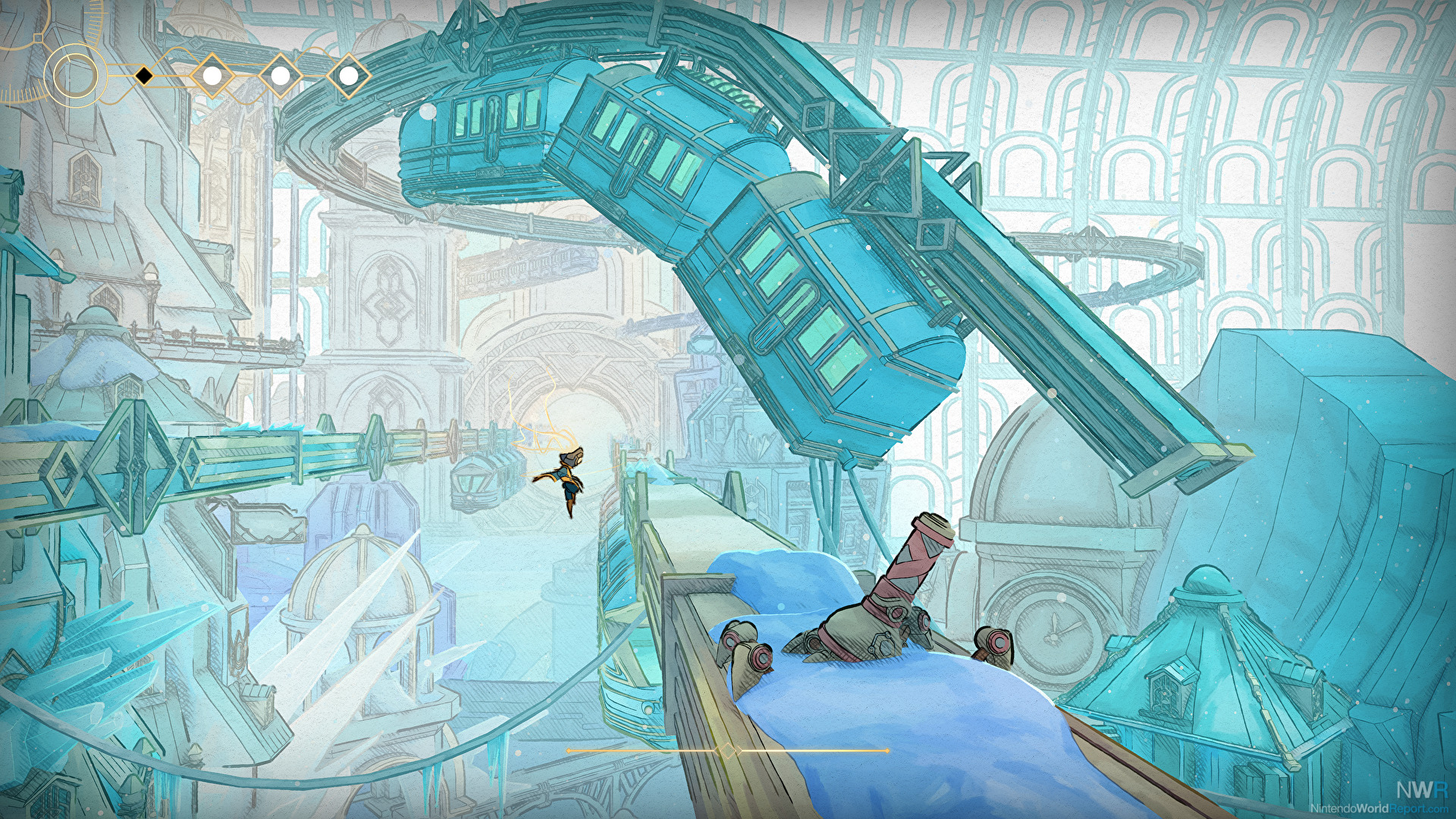
While MIO starts out with nothing more than a double jump and a straightforward attack, as you defeat bosses you regain your memories and with those come new abilities. There’s a creative set on display, including a dodge, grapple with the tendril-like hair MIO has, as well as the ability to climb along walls and ceilings like a spider. Structurally, the game is designed like a Metroidvania, but very little is spelled out for the player. You are actively encouraged to poke around the map and find new methods of moving forward. Mechanically this makes MIO as a character much more nimble and focused on aerial combat. Double jumps can be recharged by hitting objects in the air. When woven together with next abilities, you can do some pretty fantastic platforming tricks. I especially liked the aforementioned dodge; when timed perfectly, it enables you to not only dodge an incoming strike, but use it as a way of moving forward or upward again by bouncing against a projectile again and again. It is during this exploration and platforming that the game truly excels.
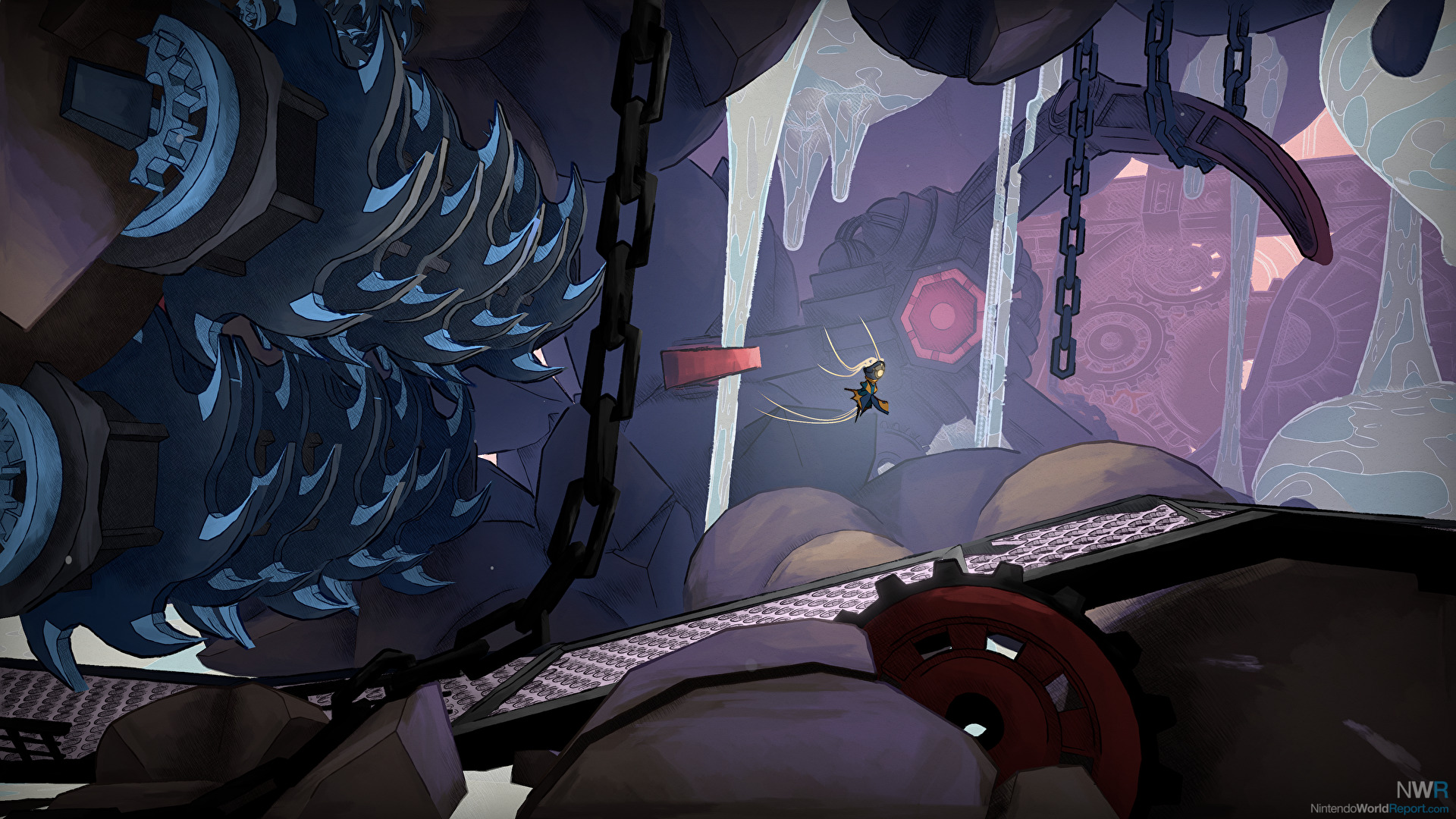
However, the opening hours of the game in particular were brutal. It's not just the combination of being lost with no clear objective of where to go, but especially the management of resources and the lack of abilities at MIO’s disposal. Every enemy in the game drops Nacre, little blobs of energy that can be exchanged at vendors for new upgrades. The upgrade system, however, is limited to a set amount of slots. At the beginning you may only have like 20 points available, and equipping modifiers will eat up slots fast. Even your health-bar is a predetermined slot that takes up 5 points. Whenever you fall in combat, you lose all the non-crystalized Nacre you were carrying. A huge setback, in particular after exploring large areas of the map and not just returning to a central point, but also not being able to spend your hard earned Nacre. It became a hindrance to the fun and snappy nature of Metroidvanias that I have enjoyed most in the past.
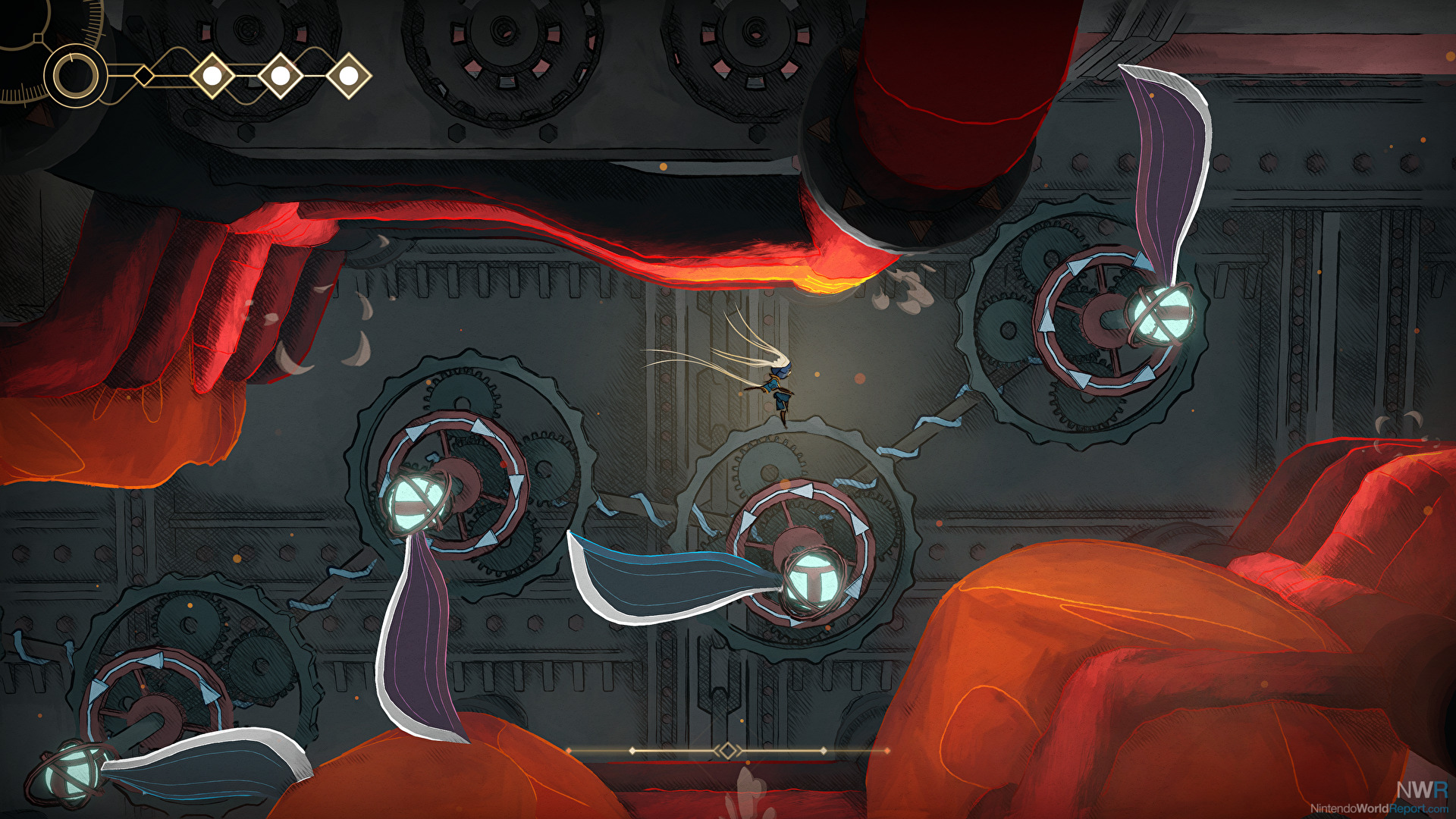
Losing progress is a design decision I can live with, but because of the lack of meaningful upgrades, combat becomes stale rather quickly, especially early on when abilities are limited to a jump and a grapple. That aforementioned dodge ability? You’ll need to have beaten at least two bosses before it is unlocked and the game tends to be unforgiving in those. While assist-options are available, and I did have to resort to them, they feel limited in their scope. Options like making regular enemies passive and regaining health only when standing on the ground for a long time do help out, but they didn’t take away the pretty hefty challenges. In particular, this is because the runbacks to get back to bosses can be brutal as well.
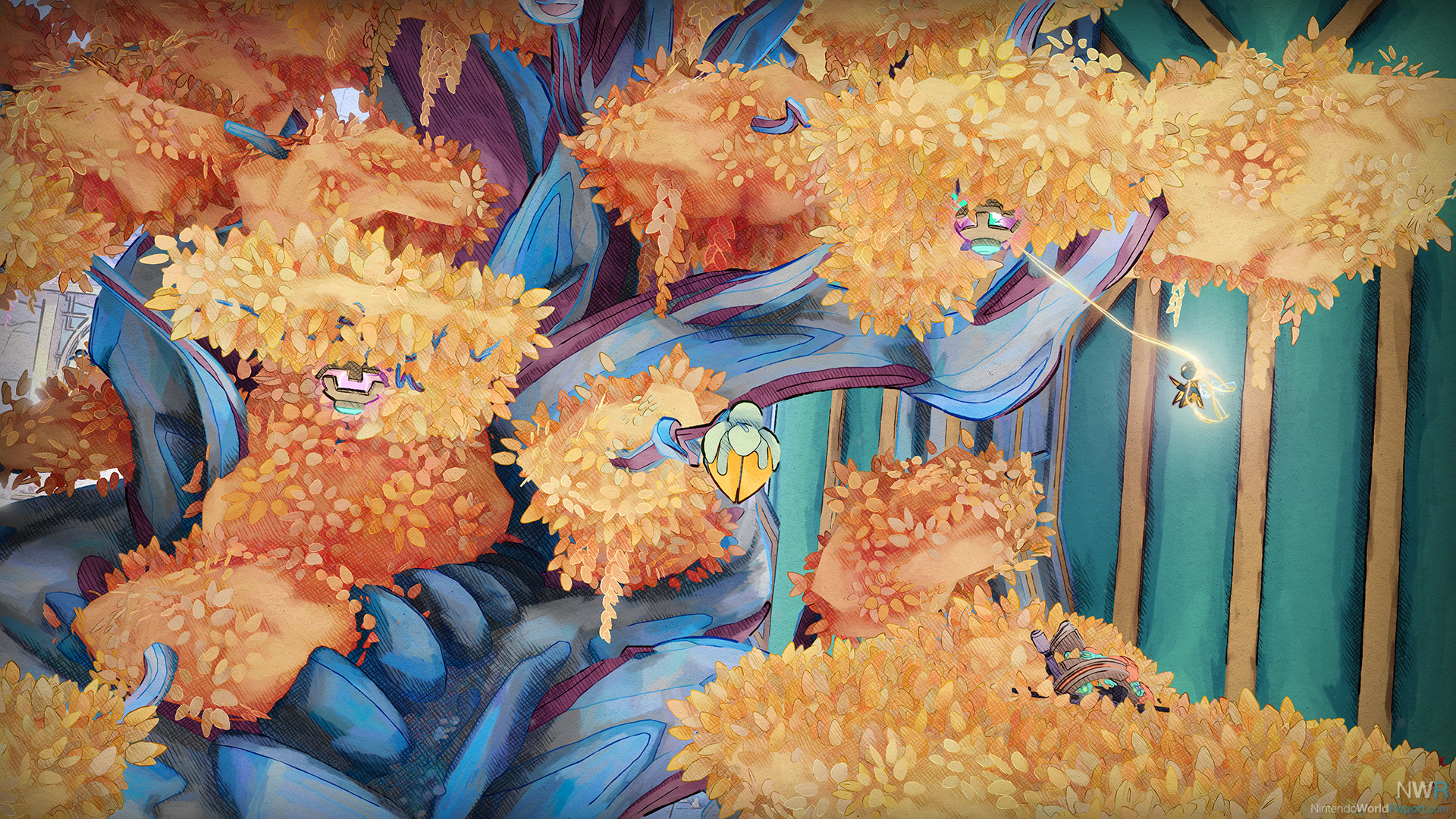
What kept pushing me on, though, was the absolutely stellar visual and audio design. There are no loading screens on Switch 2, and interconnected rooms feel like a cohesive whole within the world. You don’t just open a door and enter a room, but pass through interior walls and see bits that MIO herself is unable to see. The gardens have so many colors that it never ceases to look gorgeous. The music is serene and has a lot of beautiful vocal-performances, and can be just as intense during boss fights. Douze Dixièmes weren’t lying when they said that they took inspiration from European comics, and they have truly outdone themselves by embracing bright colors and shimmering lights, rather than the drab and dour most games in this genre go for. There is no game that looks like this out there, and it pops off the screen on both Switch 2 and especially if you have a Switch OLED model available to you.
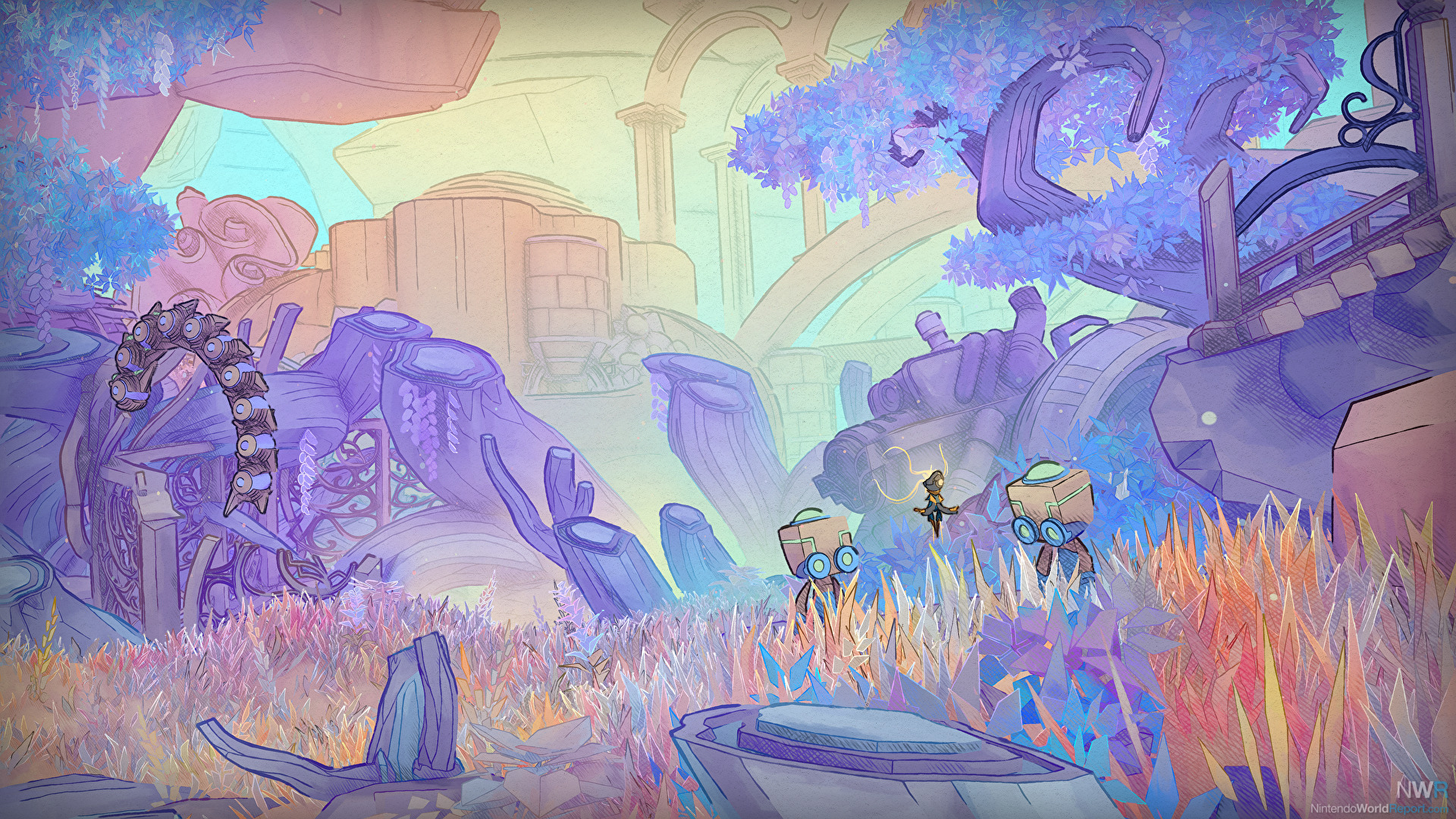
I’m truly at a crossroads recommending MIO - Memories in Orbit. On the one hand it is a gorgeous Metroidvania that you can immediately tell a lot of care and attention went into. This game’s visual design is without equal and that truly sets it apart from other titles in this genre. I love how the focus is a lot more on movement and platforming, especially embracing a more aerial approach that will have you performing jumps and tricks that most other games tend to leave behind for the latter half. On the other hand, the combat and overall design became quite frustrating for me to stick with it. Combat never feels powerful and versatile enough, in particular during the early hours, that you have an impact. Progression is slow and will require making deliberate choices on your build depending on the area or boss you’ll be tackling. It is a disservice to the beautiful world on display here that I was reset back to the start so many times and lost a lot of the meaningful progress I had made. MIO - Memories in Orbit is at odds with itself too much for my personal taste. But I also cannot deny that if you are a fan of this particular genre, MIO is one that should not be overlooked.

