


Mike Huguenor (guitarist from Jeff Rosenstock) spent the last year making a Game Boy game that turns being a touring musician into a retro-tinged narrative adventure.
In the same week that Mike Huguenor announced his debut video game, he played guitar with Jeff Rosenstock for the band’s nine-show residency in Chicago, spending his only off night going to an area book store to discuss his new book about the history of DIY record label Asian Man Records. As Huguenor told me when I talked to him in July, “sometimes when it rains, it pours.”
It’s a wild thing to see all of these forms of media converge together, but that feels like the spirit of a lot of indie and DIY culture. Huguenor has been a part of Jeff Rosenstock’s band for more than a decade, while also being a mainstay of the DIY punk scene as a part of other bands such as Shinobu and Hard Girls. He also has history with Asian Man Records founder Mike Park, which led him to writing the 2026 music history tome Elvis Is Dead, I'm Still Alive: The Story of Asian Man Records. And in between writing a book and touring with an active punk band, Huguenor also made a Game Boy game all by himself.

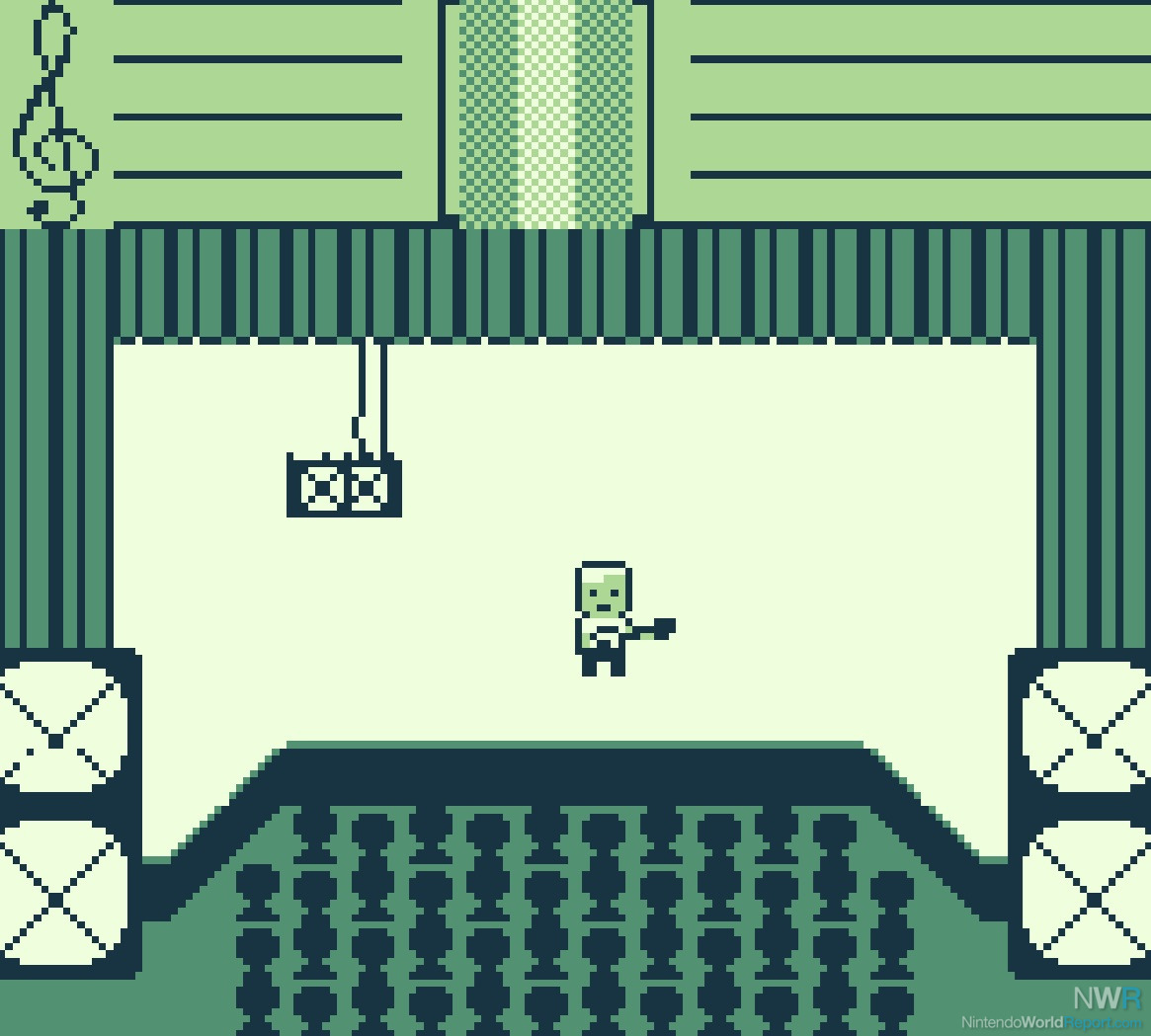
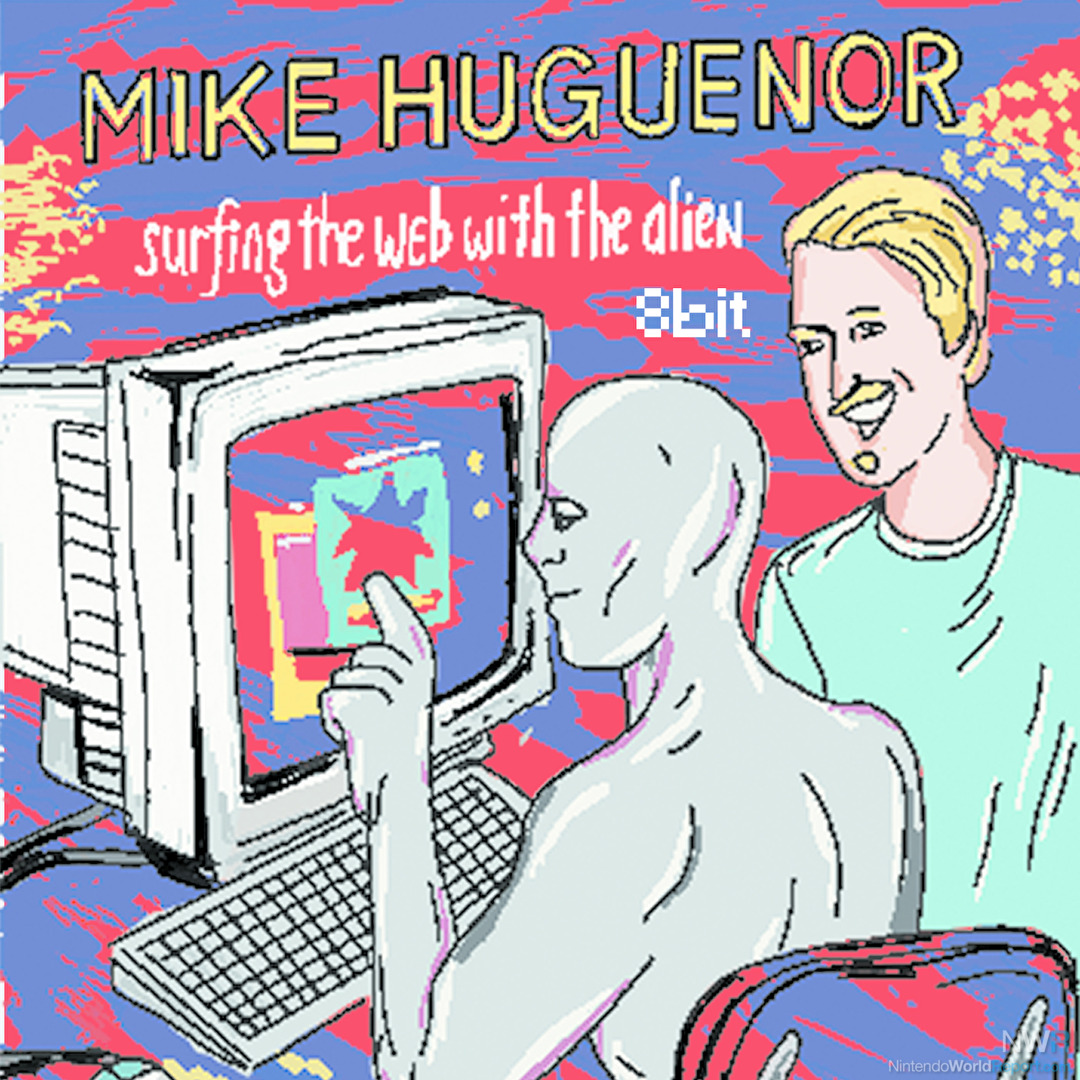
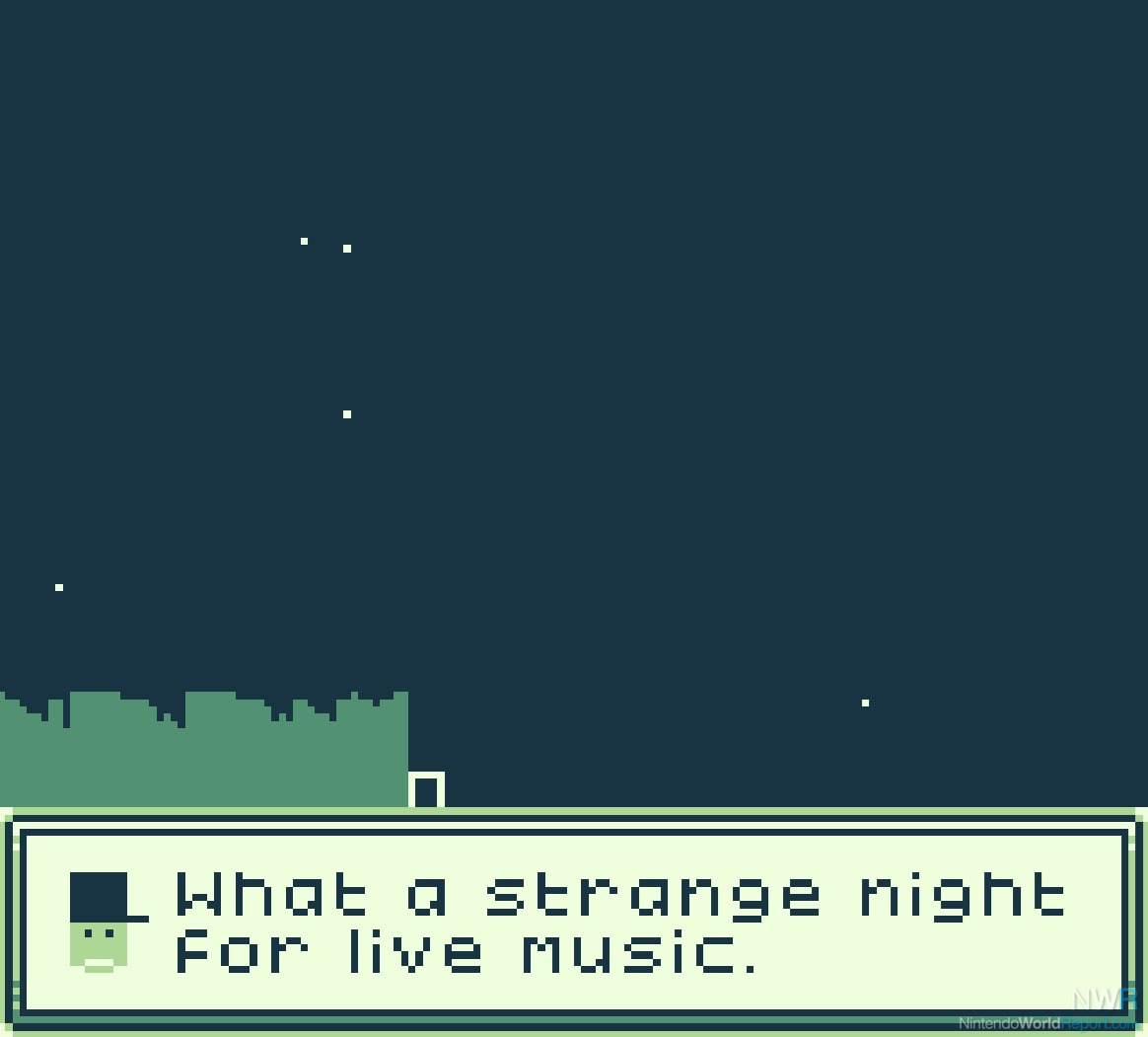
His video game is a level-based adventure game called Surfing the Web With the Alien. It’s an adaptation of his instrumental album from last year (also titled Surfing the Web With the Alien) and draws inspiration from many Nintendo and retro gaming classics while also being narratively themed around existence as a touring musician. The game is imminently releasing on Steam and itch.io and it’s also available in a hand-crafted Game Boy cartridge (while supplies last). He spent the last year using GB Studio to develop it. Asking him about a possible Switch release, it’s something Huguenor would love to see but this whole process is brand new to him. Less than a year ago, he was struggling to figure out development and just getting any of the levels to work. Now he’s hand-crafting Game Boy copies while launching on PC. With how much Huguenor has done in 2026, there’s part of me that expects a simultaneous console release in a few weeks.
The origins of this idea started while Huguenor was touring his instrumental album last year. At one of the shows, he talked to Lauren Records founder Aaron Kovacs (who put out the original version of Surfing the Web With the Alien). Kovacs brought up the idea of messing around with more small run special releases on the label. When Huguenor pitched the idea of a floppy disk with MIDI files of his music, Kovacs (who is younger than Huguenor) allegedly replied “what’s a floppy disk?” The age gap might have prevented a floppy disk limited run, but Kovacs brought up the idea of making a Game Boy game or something. From there, Huguenor’s worlds converged. He’s a lifelong gamer, recalling fond memories of writing Nintendo as a kid to pitch Mega Man bosses, and this idea of turning his music into a playable video game took off.
In August 2025, the idea took shape and Huguenor sought out how to make a Game Boy game. It took some trial and error, but eventually he came across GB Studio and hopped into the community’s Discord and started figuring out how to make his own video game. “A big thing for me making this game was that I feel like, I really wanted to make a game where there was no shooting involved. It was very interesting to me making this game because it seems somewhat problematically baked into the process of making games sometimes,” he said after noticing how, by default, “Launch Projectile” is one of GB Studio’s built-in commands.
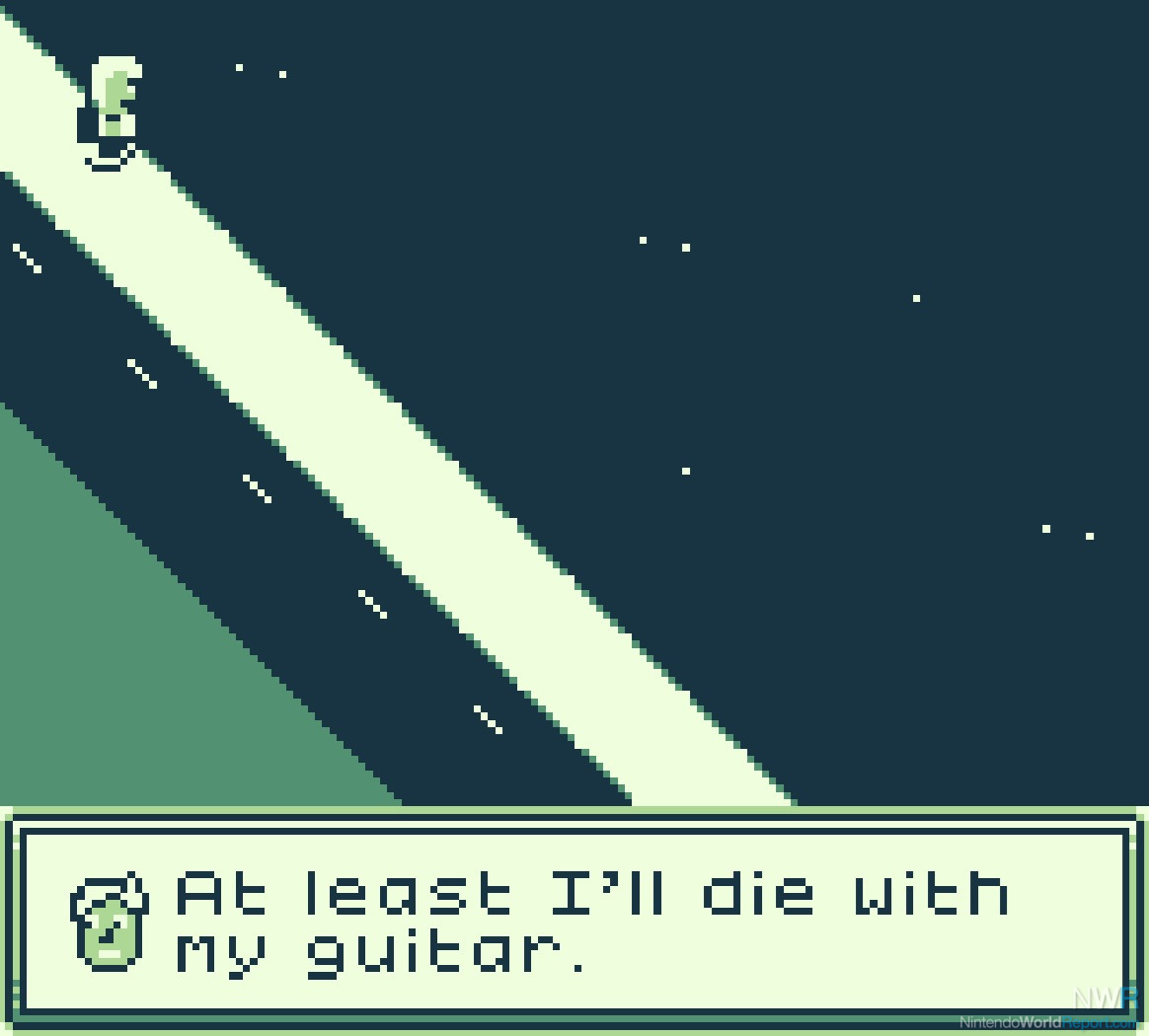
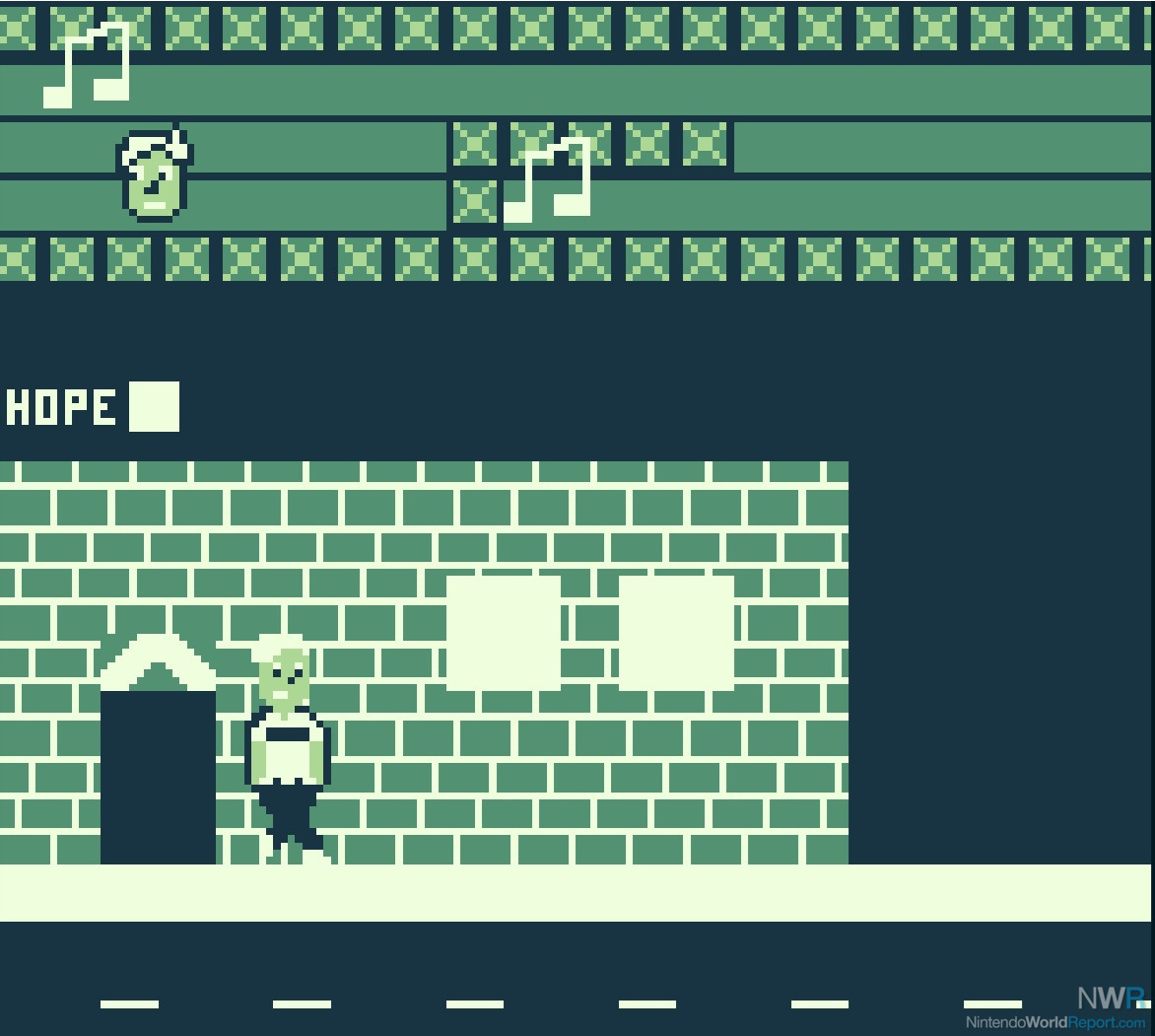
One of the earliest things he did for the game was taking his guitar-only album and turning it into an 8-bit Game Boy game soundtrack. He did all of this while on tour with Jeff Rosenstock and PUP last fall. That tour was also when the early design concepts for levels came about. It turns out that touring isn’t germane to game development so the deeper development didn’t start happening until he got back home. Tour fed into the game’s plot and gameplay though, as it follows a touring musician throughout their day. Huguenour explained: “My initial concept I had was I wanted it to be a game that lasted the length of the album but that could be replayed and experienced differently each time so that there was a reason to go back there was a reason to relive the music of the album.”
In a way, the game drives home the emotions and feelings that Huguenor expressed in the lyrics-less songs. “Sometimes a song without lyrics, you kind of know what you want to say in it before the lyrics even appear. You can intuit that there is a certain emotion happening, or a certain kind of interior space that just purely the music is sort of touching upon.” he said. “It was really important to me to be able to kind of express more through these songs because I felt like I wasn’t sure all of the interior was reaching people yet.”
Some of that interiority comes from the retro games Huguenor drew inspiration from. While it’s subtle (like his first album X’ed Out including a song called Quick Shot, which comes from Final Fantasy), his music has had gaming influences all along. This was just the first time it could be made more overt. Final Fantasy and Dragon Warrior (as Dragon Quest was initially called in America) were foundational games for Huguenor growing up, as he recalls getting an NES when he was around 6 years old. “Those were really huge ones for me because they gestured towards something larger, you know,” he said about his NES RPG experiences. “And especially at that time it felt like this sense of exploration and excitement and everything.”
He kept up with games from Super Nintendo to Nintendo 64 to PlayStation, but ended up falling off for a while until the Nintendo Switch. It’s worth noting that his first band Shinobu formed in 2002, so it stands to reason that making music and touring stymied going deep into gaming then.
As for what brought him back to wanting to make his very own game, Huguenor went on to say “I've always felt that video games are an opportunity for narrative like any other artistic format, like music or film or literature. It is a space for narrative, but this space for narrative has more interactivity than others. Because of that, it just has some different options and I really wanted to explore that.” (it makes sense he’s a fan of Hideo Kojima and Suda51).
That viewpoint explains why he carries a torch for a game like Castlevania: Simon’s Quest: “[The game] always felt like it was gesturing towards something bigger where it's not just side scrolling but that like oh you can have an effect on the environment, you can drain this pool to get further and all this stuff. It's saying that more things are possible and that's something that I always look for in music. When I'm making a game or making anything I want somebody who's receiving it to have that feeling that more things are possible than they might have realized and they can do more than they realize.”
That feels like Huguenor’s mission statement with the Surfing the Web With the Alien trilogy. He made an instrumental album that was within his known wheelhouse and then that led him to go outside of his comfort zone to make an 8-bit video game and album. “So with [this game] I really wanted to be like people can do this. People can follow through on their idea and make it real. Bring it into the world and not only that but that there are still new things to explore in an old format.”
That’s what he wants to do with his new record label Infinite Baffle, which currently houses the 8-bit adaptation of Surfing the Web With the Alien and the video game. It’s a space for experimentation and collaboration without the pressures of bigger bands and touring. He can work on a short-term collab, release it, and put it on some cassettes and not worry about selling thousands of copies to make a living. Beyond music, Huguenor might be trying to add more hyphenates to his name with film scripts, short stories, and maybe even another video game. As he said, “Really whatever someone's going to let me do, I'll be doing.”
He described the origins of the song Ominous Rattling Intensifies, which was (very clearly) inspired by Final Fantasy boss music, in a way that ties into this overall theme of Infinite Baffle and his views on games: “You know, Ominous Rattling Intensifies is an auto-generated subtitle that was on a video I was watching to explain the creepy sounds occurring in the background. But it also very much describes our current day, I would say. And so this sense of all of us being in, we're all a little bit trapped in a sort of boss fight right now, I feel like. And so that was a music, musically, that song was trying to give people something where they feel in their own life that a connection to that kind of feeling rather than having it explored through the avatar of the Black Mage or the Red Fighter or whatever.”
Here’s hoping we all get through our boss fights and have the space to experiment and create cool stuff, whether it’s music or a Game Boy game about being a touring musician inspired by retro video games.

