After Twenty Years It Is No Wonder This Series Still Works
http://www.nintendoworldreport.com/hands-on-preview/77091/rollercoaster-tycoon-wonderworks-hands-on-preview
I think I quite literally jumped up in excitement when I saw that Atari was finally bringing out a brand-new RollerCoaster Tycoon game. It is hard to overstate how big RCT was for PC gamers in Europe and around me growing up. RCT and RCT2 are bonafide classics and the later entries have proven that it is incredibly difficult to follow in their footsteps. So with RollerCoaster Tycoon: Wonderworks I was very pleased to hear and see the care and attention Springloaded is putting into this task. Their previous work on Let’s Build A Zoo has certainly prepared them for sim-like design, but are they up to the task to improve on greatness? After an hour of hands-on with Wonderworks I’m ready to believe that a new era of RCT is truly upon us.
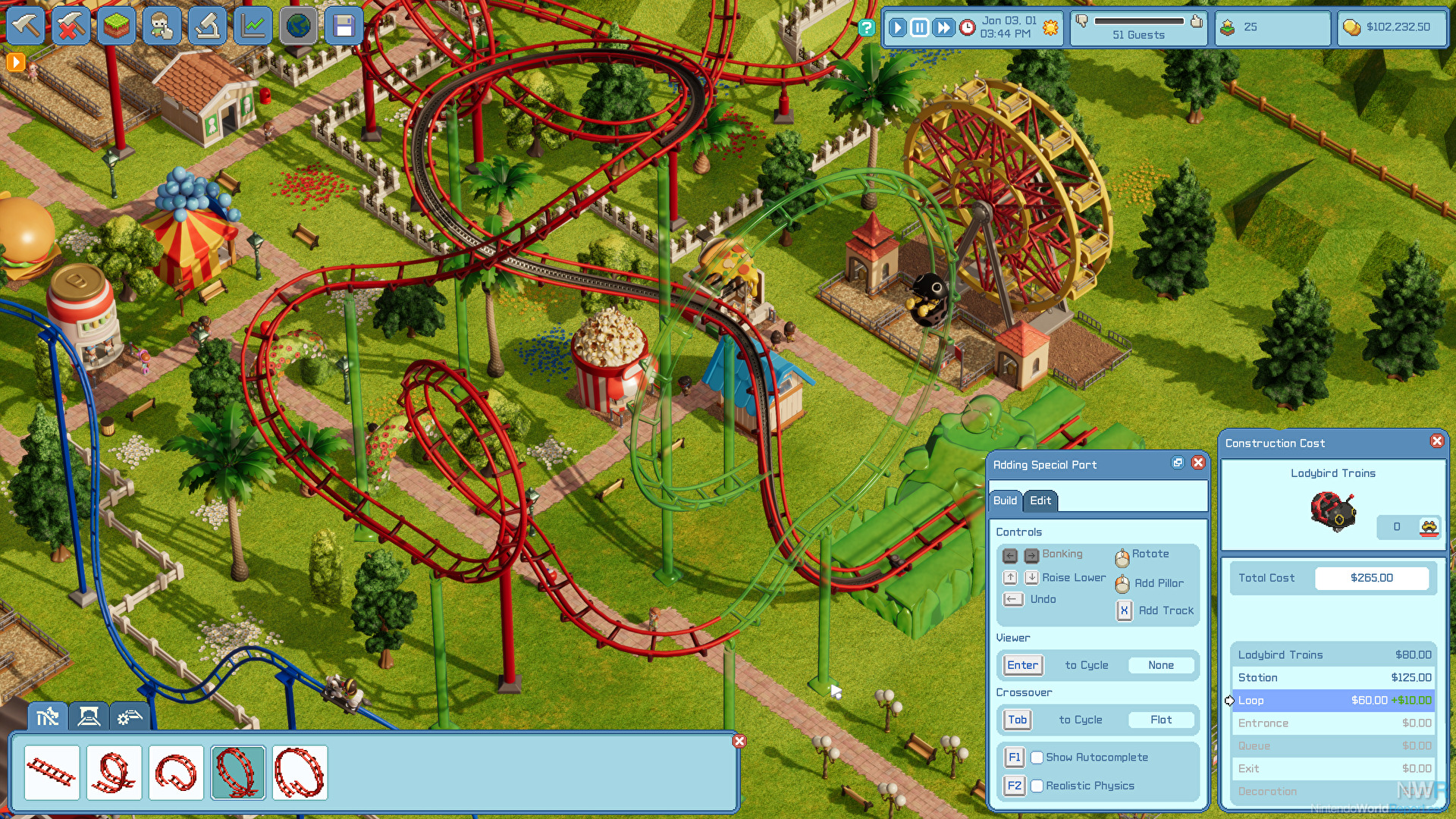
So let’s begin with the big overall approach that the designers are taking with Wonderworks. This time around you are truly working on building an empire of theme parks around the world. You start out with a limited and small park with truly dingy rides and attractions. Barrels slapped on a wheel, a barn repurposed as a slide or simple wooden shacks functioning as entrances and exits. It doesn’t just emphasize that you are starting from scratch, but also gives each park a distinctive layout and challenge. But of course as your park grows you can build new coasters and attractions to attract customers.
The keyword in Wonderworks is truly ‘customization’. There was always a certain amount of control you had over individual rides and stands, but here almost everything can be tweaked. Want your coaster to have different speeds for ramps and loops? You can adjust each booster or break individually. Want your chair swing to accelerate at an intense speed? You can change it on the fly. When constructing your coaster you can enable realistic physics and get a little dummy-cart going while you are laying down the track to see if they will remain in their seats. The builder itself feels more intuitive than the original RCT if you ask me. In part because those original games were limited by their programming and we as players got so used to that particular UI that we never questioned it. But here the coaster builder automatically follows your cursor. Meaning that building corners or curves is automatically done by ‘drawing’ your track. It is something that will take some getting used to, but after ten minutes I was already using elevation, speed sections and breaks to create a pretty cool looping track. Coasters and rides can be upgraded individually, but if for some reason they end up fully destroyed, you will lose all progress for that ride. It’s a nice way to keep evolving your park long after you’ve completed the missions.
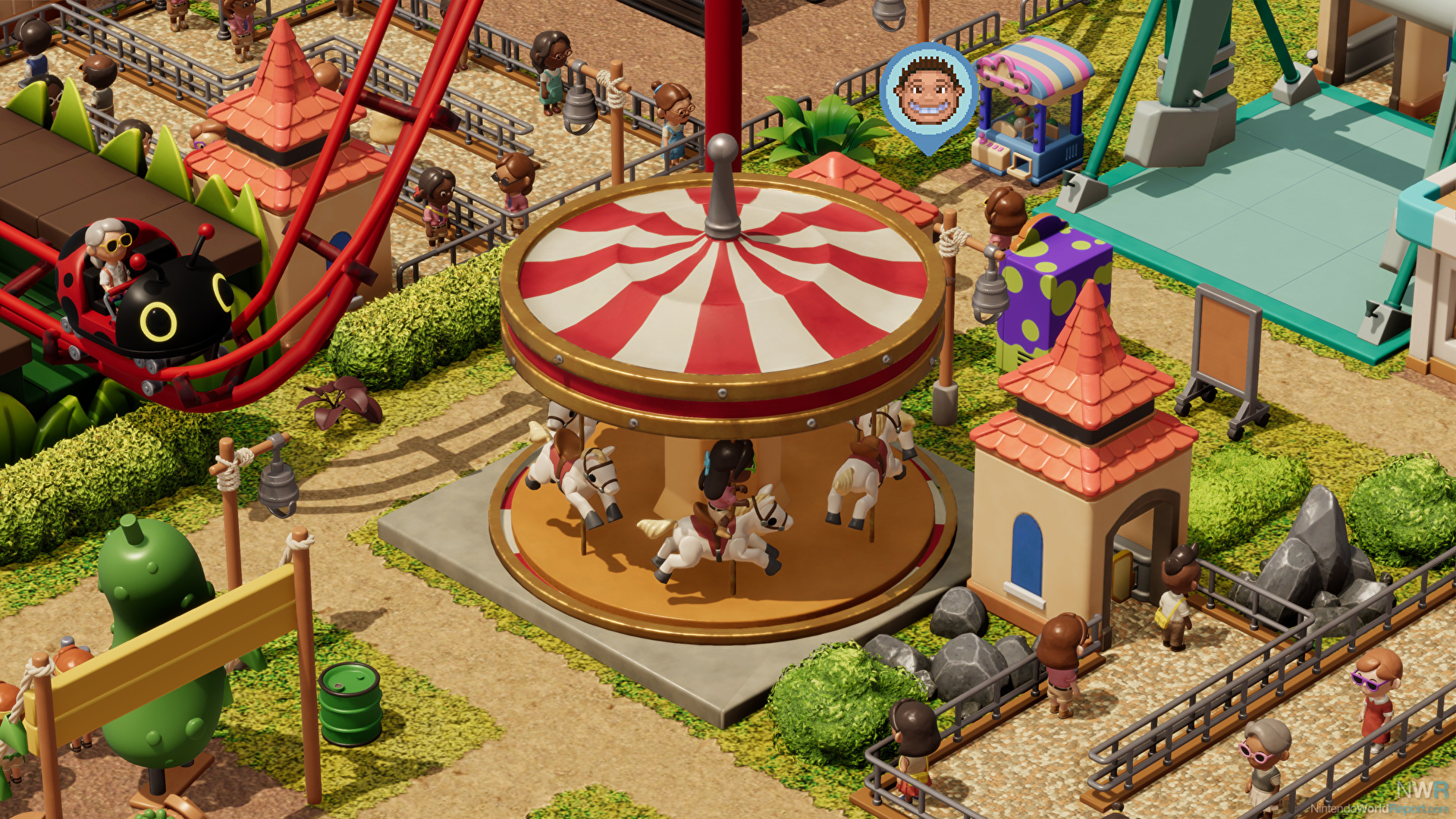
On the management side a few things work differently now too. New rides can be researched and developed with a dedicated laboratory that has to be placed inside the park. While you still get regular new rides, occasionally you may need to choose between two different ones, meaning that no park will ever really be the same. There’s also new employee categories. Concession stands are operated by park employees who will need regular breaks and energy drinks to improve their morale and serving speed. So much for locking park guests in with a soda fountain to lose, I mean spend, all their hard earned cash on. And of course, the antlike nature of park guests is still something you have full control over. Not just reading their thoughts, but of course dragging them over to their ‘last ride’. However, this time around you may actually end up getting sued by relatives over the deaths of park guests. I had a big laugh when I saw that I could hire an expert legal team that would lower the settlement fee out of court. Something we truly couldn’t imagine in the real world. Right?
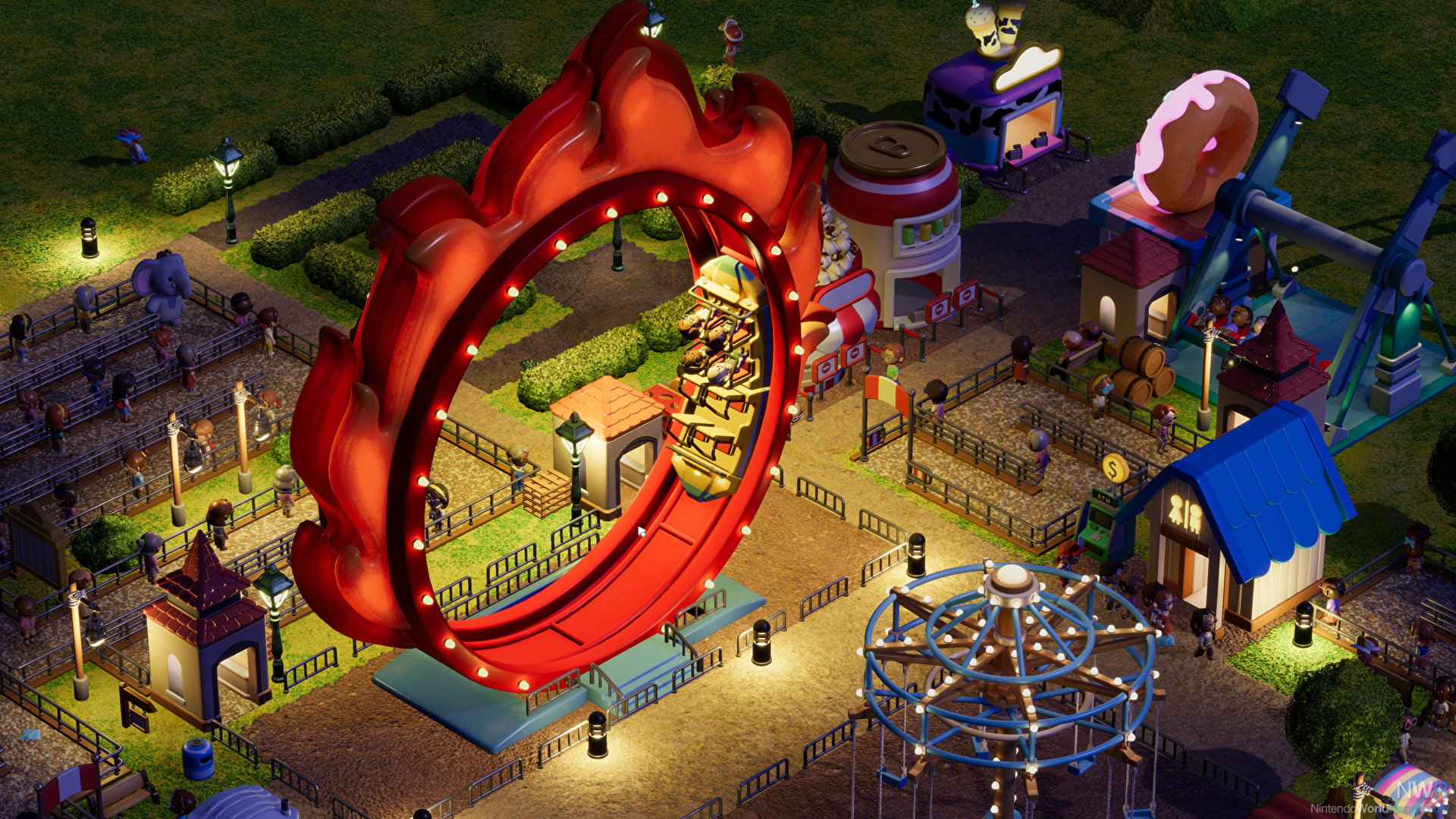
The real challenge that Springloaded and Atari are faced with is a generation of players that have loved and devoured everything RCT. It’s no wonder that after the reveal trailer they received a lot of feedback from dedicated players. Therefore the game will launch first in Early Access sometime in 2027 to make sure that they can optimize and adjust the features available. While I’m not usually a big fan of Early Access, in this case it feels warranted. For example, I tried to place park benches across pathways but it removed the path instead. Placing a bench next to a path is so unintuitive to a veteran RCT player that I’m now fully on board with getting in more feedback for the team down the road. When asked about licensed rides from parks like Six Flags as the original had, the developers remain committed to their own rides and the creativity of players, but didn’t necessarily rule anything out after the game hits 1.0 down the road.
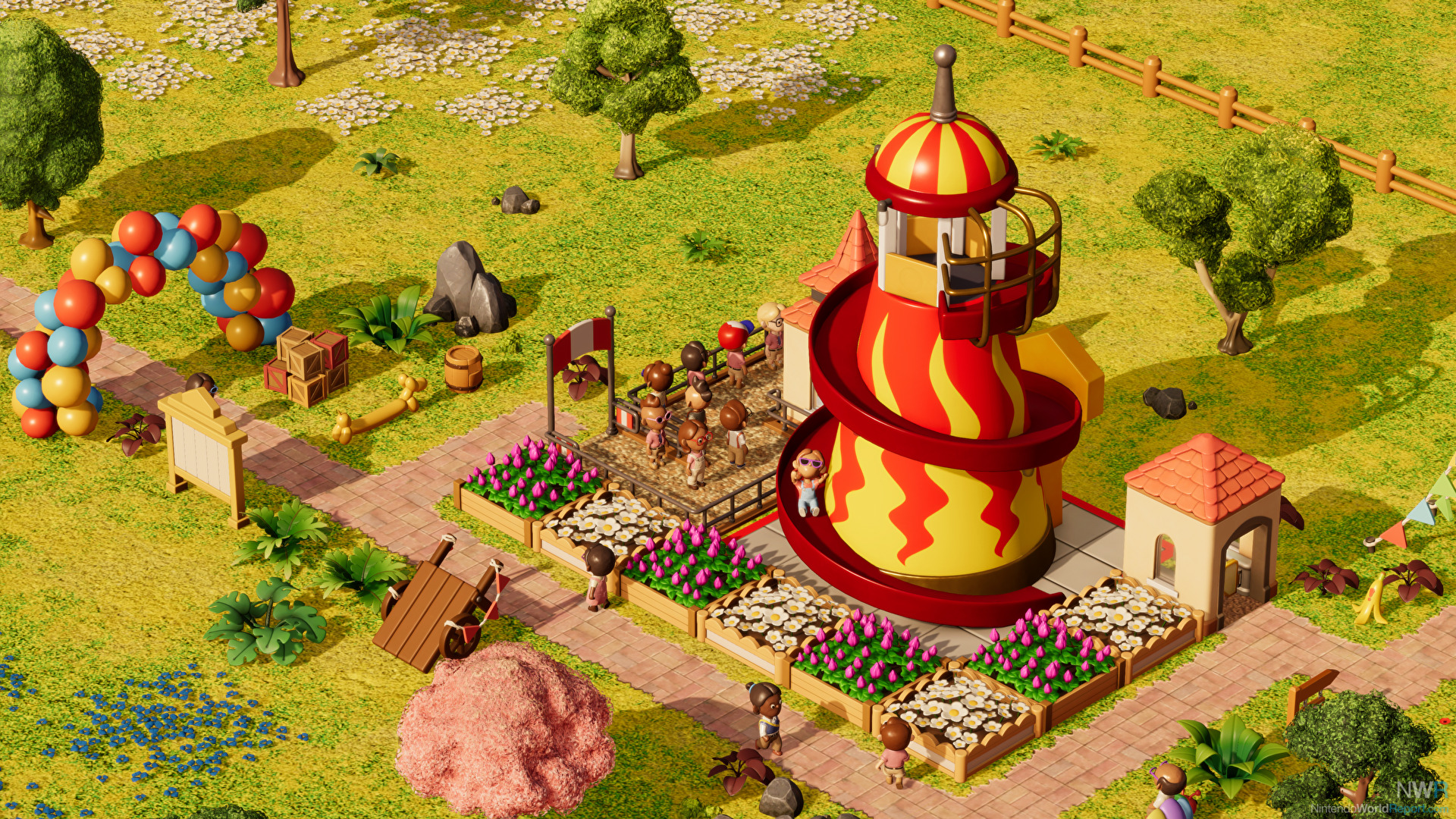
But the foundations for RCT Wonderworks do feel pretty solid. The visual style has finally found the right balance between the classic pixel art and the more dynamic 3D art for its rides and scenery. In particular it should help with terraforming and building truly absurd coasters. The worldwide angle the game takes allows for some really fun locations as well as an interconnected world. Your ambitions as a theme park tycoon are not merely limited to the boundaries of the park itself, which in turn encourages more creativity. While I’m cautious I am also very optimistic about the future of Rollercoaster Tycoon. As a series with so much potential for modern installments Wonderworks seems to put its right foot forward. With the proper guidance from players and developers willing to listen I can see this truly being the next generation of theme park management sims. Get me a fastpass for 2027 please!


 Topic: RollerCoaster Tycoon: Wonderworks - Hands-on Preview (Read 3883 times)

